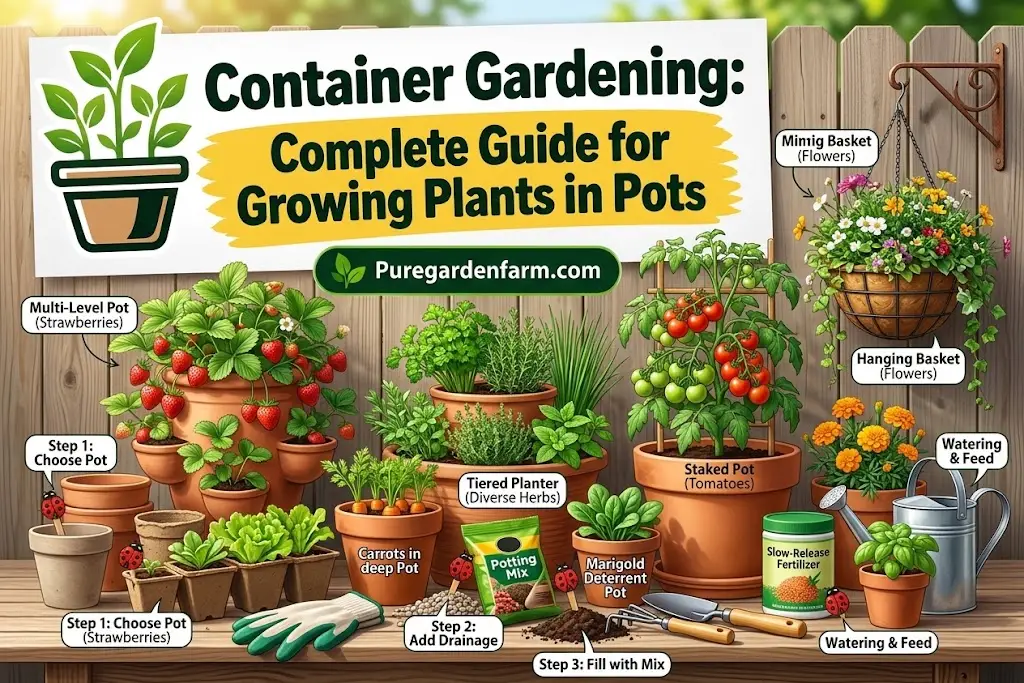
Container gardening lets you grow vegetables, herbs, flowers, and even some fruiting plants without a traditional garden bed. A balcony, patio, doorstep, rooftop, or sunny window can become a useful growing space when containers are chosen and managed correctly.
The key is to treat a container as a complete growing environment. Pot size, drainage, soil, sunlight, watering, and feeding all influence how well a plant performs.
Quick Answer: What Is Container Gardening?
Container gardening means growing plants in pots, tubs, grow bags, window boxes, or other suitable containers instead of planting directly in the ground. It is ideal for small spaces and gives you greater control over soil and plant placement.
- Use containers with drainage holes.
- Match pot size to mature plant size.
- Use a quality potting mix rather than heavy garden soil alone.
- Place sun-loving crops where they receive enough direct light.
- Check moisture regularly because containers can dry quickly.
Best Containers for Gardening
You can grow plants in plastic pots, fabric grow bags, ceramic containers, wooden planters, window boxes, and other food-safe or garden-safe containers. The material matters less than drainage, size, stability, and suitability for the plant.
Always make sure excess water can escape. Roots need both moisture and air, and constantly waterlogged soil can cause serious root problems.
How to Choose the Right Pot Size
Small herbs and shallow-rooted crops can use smaller containers, while tomatoes, peppers, cucumbers, and other larger vegetables need substantially more root space. Bigger containers also hold moisture more steadily.
Do not choose a tiny pot simply because it is easier to move. A root-bound plant can become stressed quickly, especially during hot weather.
Best Soil for Container Gardening
Containers need a growing medium that holds moisture without becoming permanently soggy. Commercial potting mixes are convenient, while homemade mixes can be built from suitable components that provide structure, organic matter, and drainage.
Finished compost can improve the mix, but avoid using pure compost as the entire container medium. For soil preparation ideas, read how to prepare soil for a garden and how to make compost at home.
Best Vegetables for Containers
Many vegetables can grow successfully in pots. Lettuce, radishes, carrots, leafy greens, peppers, beans, compact cucumbers, and tomatoes are common choices. Choose compact or dwarf varieties when possible.
The University of Maryland Extension notes that many vegetables and herbs can be grown in containers, while larger crops such as melons and corn are more challenging because of their space requirements.
Growing Tomatoes in Containers
Tomatoes can be excellent container plants when they receive sufficient sun, root space, water, and support. Choose a suitable variety and use a sturdy pot because mature plants can become top-heavy.
For detailed crop-specific advice, see how to grow tomatoes in pots.
Growing Herbs in Containers
Herbs are especially well suited to containers because many remain relatively compact and can be harvested regularly. Basil, mint, and rosemary are useful starting choices, although each has different light and moisture preferences.
See herb garden ideas, how to grow basil, how to grow mint, and how to grow rosemary.
How Much Sun Do Container Plants Need?
Sunlight requirements depend on the crop. Fruiting vegetables usually need strong light, while some leafy greens tolerate less. Watch your growing area across the day before deciding where to place containers.
Remember that sunlight can be stronger near reflective walls and rooftops. Move containers when practical if heat or exposure becomes excessive.
How to Water Container Plants
Container plants often need more frequent moisture checks than plants growing in the ground because the available soil volume is limited. Do not water automatically just because it is a certain day. Check the soil and plant condition first.
When watering is needed, water thoroughly so moisture reaches the root zone and excess water drains away. Your guide on how often to water plants covers the basics.
Fertilizing Container Plants
Nutrients can become depleted because repeated watering moves soluble nutrients through the container. Feed according to the crop and fertilizer label rather than assuming more fertilizer means faster growth.
Read how to fertilize plants before starting a regular feeding routine.
Common Container Gardening Problems
- Yellow leaves from excess moisture or other stress.
- Dry soil caused by small pots or hot conditions.
- Root crowding from undersized containers.
- Poor growth from insufficient light.
- Plants falling over because of weak support.
- Salt buildup from repeated fertilization.
Container Gardening Tips for Beginners
- Start with a few containers rather than dozens.
- Label plants so you can learn their needs.
- Group containers with similar watering requirements.
- Raise pots slightly if drainage is poor.
- Inspect leaves regularly for pests.
- Refresh tired growing media between crops when necessary.
Container Gardening FAQs
Can I grow vegetables on a balcony?
Yes. Many vegetables and herbs grow well in containers when the balcony provides adequate light, safe weight capacity, water access, and drainage.
Do containers need drainage holes?
Yes. Drainage is essential for most container plants because excess water must have a way to leave the root zone.
Can I use garden soil in pots?
Heavy garden soil can compact in containers and drain poorly. A suitable potting mix is generally a better choice.
Helpful Resources
For more gardening guidance, read how to grow vegetables, plant care tips, and gardening tips for beginners.
Useful external references include University of Maryland Extension, Penn State Extension, RHS container gardening guidance, University of Maine Extension, and USDA hardiness zone information.
Conclusion
Container gardening is a flexible way to grow useful plants in limited space. Choose the right container, provide good drainage and suitable soil, match plants to available light, and monitor moisture regularly.