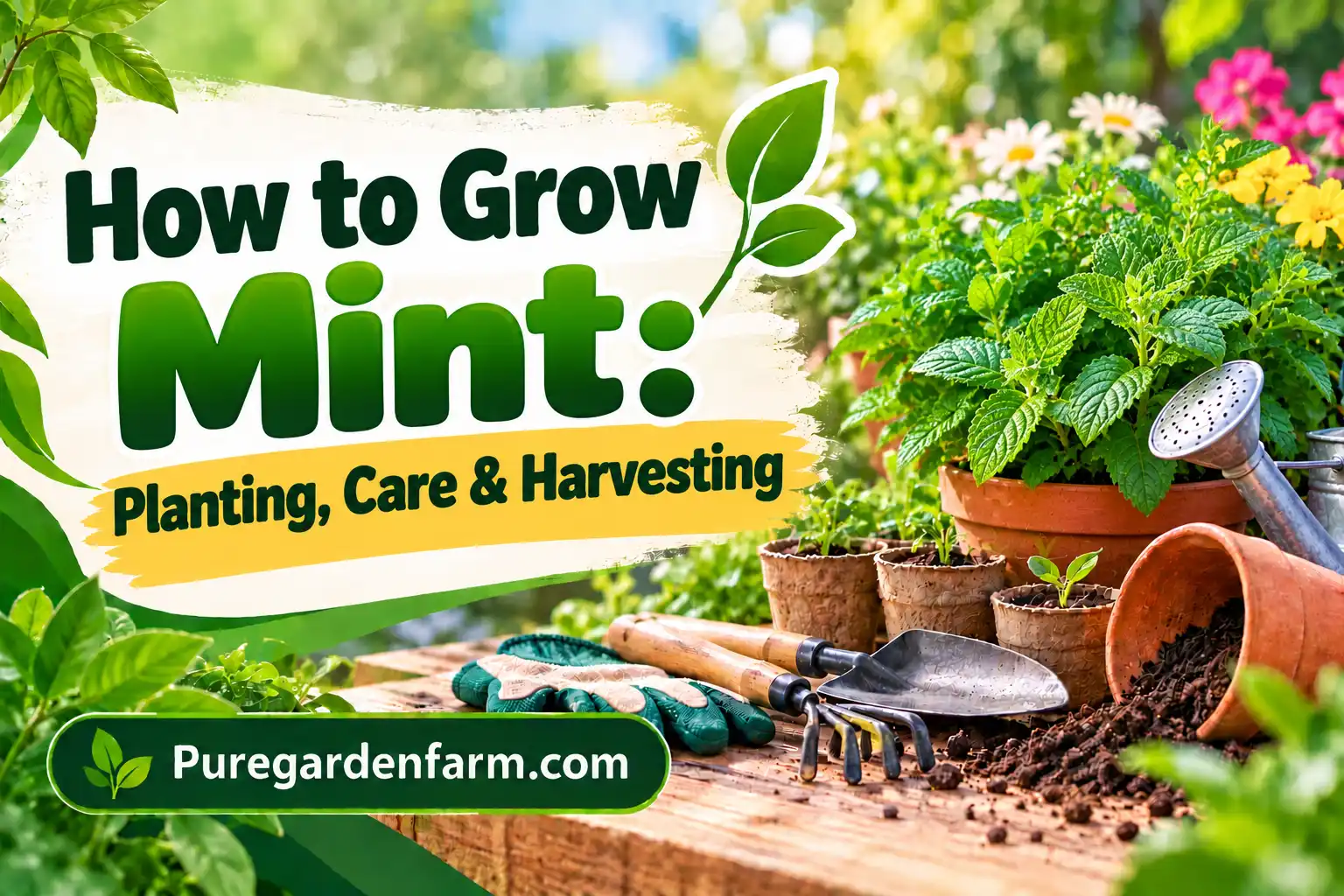
If you’re learning how to grow mint, start with one healthy plant and a dedicated container. Mint is forgiving, productive, and useful in teas, cooking, desserts, and fresh drinks.
The main challenge isn’t keeping mint alive. It’s keeping its vigorous growth under control. This guide covers planting, light, soil, water, feeding, pruning, propagation, harvesting, winter care, and common problems.
Quick Answer
How to grow mint: Plant it in moist, well-drained soil and give it full sun or partial shade. For most home gardens, a dedicated container is the easiest way to control its spreading roots.
TL;DR
• Start with a healthy nursery plant or rooted cutting.
• Use a dedicated container with drainage holes.
• Keep the soil moist, never constantly soggy.
• Give mint full sun or partial shade.
• Harvest growing tips often to encourage branching.
• Watch containers for escaping runners and rhizomes.
What Does Mint Need to Grow Well?
Mint belongs to the Mentha genus and the Lamiaceae family. Common culinary types include spearmint and peppermint.
Most garden mints are perennial herbs. They can return each year in suitable climates and spread rapidly through underground stems.
The basic formula is simple: moisture + drainage + light + containment.
• Give mint full sun or partial shade.
• Use fertile soil that holds some moisture.
• Make sure excess water can drain away.
• Check containers more often during hot weather.
• Harvest regularly to encourage fresh shoots.
• Avoid keeping roots in standing water.
• Give vigorous varieties their own container.
• Check local hardiness information for your variety.
Which Mint Variety Should You Grow?
Spearmint and peppermint are two of the most common culinary choices. Other varieties offer different scents, flavors, leaf shapes, and colors.
Choose the variety based on how you plan to use it. Also check the plant label because hardiness and growth habits can vary.
• Spearmint: mild and versatile for cooking and drinks.
• Peppermint: stronger, cooler flavor from higher menthol content.
• Chocolate mint: distinctive fragrance and dark stems.
• Apple mint: softer leaves with fruity notes.
• Pineapple mint: variegated foliage and fruity aroma.
• Orange mint: citrus-like fragrance.
• Choose named cultivars when exact traits matter.
• Keep different vigorous varieties in separate containers.
When Should You Plant Mint?
Spring is a reliable planting season for most U.S. gardeners. Wait until severe frost risk has passed before moving young plants outdoors.
Fall planting can also work in regions with mild winters. In colder areas, containers make it easier to protect plants.
• Use local frost dates for spring planting.
• Plant established divisions during mild weather.
• Check your variety’s USDA hardiness information.
• Treat tender varieties differently from hardy types.
• Use containers in colder climates when useful.
• Avoid planting during extreme heat.
• Give new transplants steady moisture.
• Adjust timing for your local climate.
Should You Grow Mint in a Pot?
For most home gardeners, yes. Mint spreads through rhizomes and rooting stems, so an open garden bed can become crowded quickly.
University of Maryland Extension recommends containers around 12 to 16 inches in diameter for controlling spreading mint.
A dedicated container also makes harvesting convenient. Place it on a patio, balcony, porch, or other suitable hard surface.
• Use a pot with drainage holes.
• Choose a dedicated container for mint.
• Use a larger pot for established plants.
• Don’t place the pot where escaping roots can reach soil.
• Check drainage holes for new runners.
• Repot crowded plants when needed.
• Keep vigorous varieties separate.
• Use a buried container only with careful containment.
How Much Sun Does Mint Need?
Mint grows well in full sun to partial shade. The best location depends on your climate and the variety.
Hot afternoon sun can increase water loss. In very warm areas, some afternoon shade may help keep foliage from drying too quickly.
• Give outdoor mint strong natural light.
• Use partial shade during extreme heat.
• Watch for weak, stretched stems in deep shade.
• Place indoor mint near a bright window.
• Rotate indoor pots for balanced growth.
• Add supplemental light when natural light is weak.
• Protect sensitive variegated types from harsh exposure.
• Change light gradually when moving plants.
What Soil Is Best for Mint?
Mint prefers rich, moist, well-drained soil. It tolerates many soil types, but poor drainage creates a much bigger problem than slightly imperfect soil.
For containers, use a quality potting mix rather than heavy garden soil. Iowa State Extension also describes mint as performing best in moist, well-drained soil with organic matter.
• Choose soil that holds moisture without staying saturated.
• Use a quality container mix.
• Add organic matter to poor garden soil.
• Avoid permanently soggy planting sites.
• Don’t compact the soil around roots.
• Check drainage after heavy rain.
• Replace exhausted container mix when repotting.
• Don’t use fertilizer to fix drainage problems.
How Do You Plant Mint?
Start with a healthy nursery plant, rooted cutting, or division. Plant it at roughly the same depth it previously occupied.
Water thoroughly after planting. Then place the mint where it receives suitable light and airflow.
• Gently loosen tightly circling roots.
• Set the root ball at its previous depth.
• Firm soil around the roots.
• Water immediately after planting.
• Let excess water drain completely.
• Keep new plants evenly moist.
• Avoid severe heat immediately after transplanting.
• Check new growth during establishment.
How Often Should You Water Mint?
There is no single watering schedule that fits every mint plant. Container size, weather, sunlight, soil, and plant growth all change water needs.
Instead, check the soil. Water when the growing mix begins to dry, then water thoroughly enough to wet the root area.
• Check soil moisture before watering.
• Water more often during hot, dry weather.
• Check containers more frequently than garden beds.
• Water deeply rather than giving tiny splashes.
• Let excess water escape through drainage holes.
• Empty standing water from saucers.
• Reduce watering during cool, slow growth.
• Improve drainage if soil remains wet.
Does Mint Need Fertilizer?
Mint doesn’t need heavy feeding when growing in fertile soil. Container plants may need occasional fertilizer because nutrients are gradually depleted.
Follow the product label if you feed your plant. More fertilizer isn’t automatically better.
• Start with a good growing mix.
• Feed during active growth when needed.
• Follow label directions carefully.
• Avoid excessive fertilizer applications.
• Don’t fertilize severely stressed plants first.
• Fix watering or drainage problems before feeding.
• Reduce feeding when growth slows.
• Consider a soil test for persistent garden issues.
How Do You Prune Mint?
Regular harvesting is one of the best ways to prune mint naturally. Pinching growing tips encourages branching and helps keep the plant compact.
If flowers appear, you can remove the flower stems when your goal is leafy growth. Stronger cutbacks can refresh older plants.
• Pinch stems above a healthy leaf node.
• Harvest growing tips regularly.
• Remove dead or damaged foliage.
• Cut flowering stems when desired.
• Don’t strip the entire plant at once.
• Thin crowded growth to improve airflow.
• Cut back tired plants to encourage fresh shoots.
• Clean tools after working on diseased plants.
How Do You Grow Mint From Cuttings?
Cuttings are one of the quickest ways to make new mint plants. Healthy stems can develop roots in water or moist growing media.
This method also preserves the characteristics of the parent plant better than seed propagation.
• Choose a healthy, non-flowering stem.
• Cut several inches of fresh growth.
• Remove the lower leaves.
• Leave several leaves near the stem tip.
• Place the lower stem in clean water.
• Give the cutting bright, indirect light.
• Change cloudy water as needed.
• Move rooted cuttings into moist potting mix.
Can You Grow Mint From Seed?
Yes, but seed isn’t always the best choice when you want an exact cultivar. Mint seedlings can vary in characteristics.
Established plants, divisions, and cuttings are often more predictable. If using seed, start it in a clean, fine growing mix and keep the surface evenly moist.
• Start seeds indoors when useful.
• Use a quality seed-starting mix.
• Keep the surface lightly moist.
• Give seedlings strong light after emergence.
• Avoid planting tiny seeds too deeply.
• Thin crowded seedlings when necessary.
• Harden seedlings before outdoor planting.
• Choose cuttings for cultivar consistency.
How Do You Grow Mint Indoors?
Mint can grow indoors when it receives enough light and steady moisture. A dedicated container is especially useful because mint can spread through stems and roots.
A bright window can work well. During darker seasons, supplemental lighting can help maintain compact growth.
• Use a container with drainage.
• Choose fresh, well-drained potting mix.
• Place the plant near a bright window.
• Rotate the pot for even growth.
• Check moisture regularly.
• Avoid standing water.
• Harvest often to maintain a bushy plant.
• Inspect outdoor plants before bringing them indoors.
How Do You Stop Mint From Spreading?
Mint’s spreading habit is useful when you want a dense patch, but troublesome in mixed beds. Containment should be planned before planting.
Containers are usually the simplest option. If mint is already spreading, remove escaping stems and rhizomes before they establish elsewhere.
• Grow vigorous mint in a dedicated container.
• Keep containers on surfaces that block rooting.
• Inspect around pots regularly.
• Trim escaping runners promptly.
• Use controlled raised beds when appropriate.
• Don’t plant mint beside small perennial herbs.
• Divide crowded containers periodically.
• Remove unwanted rhizomes as completely as possible.
How Do You Harvest and Store Mint?
Mint can be harvested throughout active growth. Young shoot tips often provide excellent flavor, while regular harvesting encourages more fresh growth.
For drying, harvest around the flower-bud stage. Iowa State Extension notes that this timing can provide strong flavor and aroma because essential oils are concentrated around flowering.
• Cut healthy stems with clean scissors.
• Harvest young tips for fresh use.
• Harvest before flowering when preparing mint for drying.
• Leave enough foliage for continued growth.
• Keep fresh stems in water for short-term storage.
• Refrigerate leaves for several days.
• Freeze chopped leaves in water for longer storage.
• Dry stems in a dark, well-ventilated place.
Why Are My Mint Leaves Turning Yellow or Brown?
Leaf discoloration usually means the growing conditions need checking. Don’t diagnose the problem from leaf color alone.
Start with moisture, drainage, light, temperature, and airflow. Then inspect the leaves and stems for pests or disease symptoms.
| Symptom | Possible cause | First check |
|---|---|---|
| Yellow lower leaves | Excess moisture or root stress | Soil and drainage |
| Brown edges | Dry soil or heat stress | Moisture and heat |
| Long weak stems | Insufficient light | Light exposure |
| Small pale leaves | Weak growing conditions | Light and nutrition |
| Leaf spots | Disease or pest damage | Leaf undersides |
| Orange-brown spots | Possible mint rust | Foliage and airflow |
| Wilting with wet soil | Root stress | Drainage |
| Rapid spreading | Normal vigorous growth | Container control |
Mint rust can occur when foliage stays wet for long periods, while crowded conditions can increase disease problems.
FAQs
Can mint grow in full shade?
Mint can tolerate some shade, but deep shade usually produces weaker growth. Give it brighter light when possible, especially indoors.
How big should a mint pot be?
A container around 12 to 16 inches wide is a practical size for established mint. Smaller pots can work temporarily, but they dry out and fill with roots faster.
Can you grow different types of mint together?
It’s usually better to give each vigorous variety its own container. This makes spreading easier to control and keeps varieties from becoming difficult to identify.
Should mint be allowed to flower?
It can flower, and mint flowers can support pollinators. If your main goal is leafy harvest, regular pinching can keep the plant focused on fresh shoots.
Can mint survive winter outdoors?
Many common mints are hardy perennials, but survival depends on the variety and local climate. Check the specific cultivar’s hardiness before relying on outdoor winter survival.
How often should mint be harvested?
Harvest whenever the plant has enough healthy growth. Regular picking encourages branching and provides a steady supply of fresh leaves.
Conclusion
Growing mint successfully is less about complicated care and more about managing moisture, light, and spread. Give the plant good drainage, suitable light, and regular harvesting.
For most home gardeners, a dedicated container is the best starting point. Choose your favorite variety, plant it in quality mix, and check its moisture and spreading growth regularly.