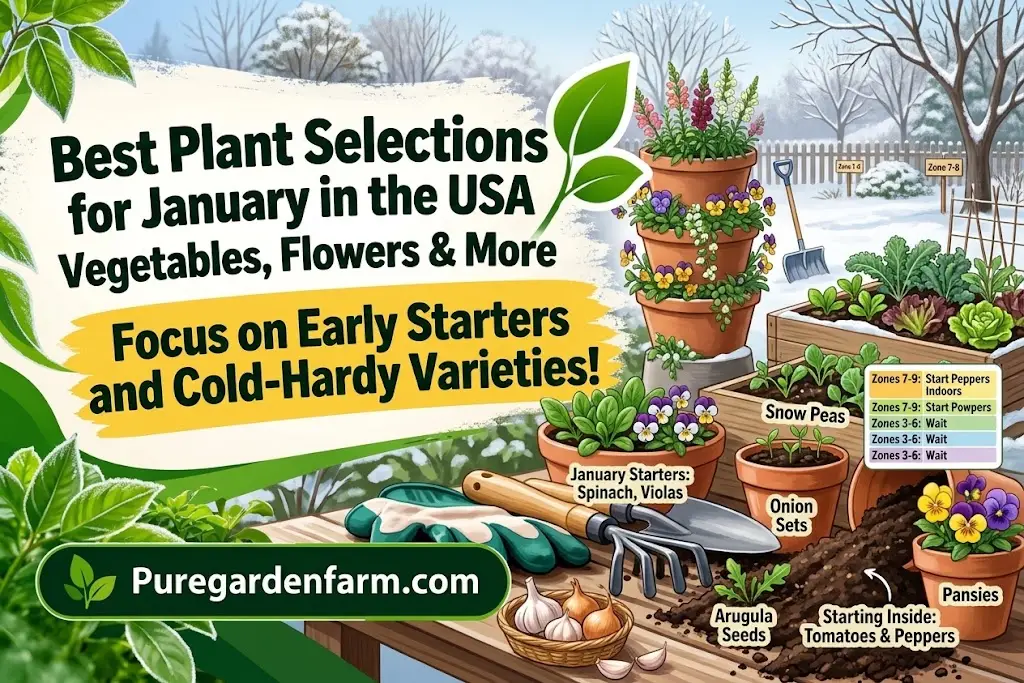
January may seem like a quiet month for gardening, but it is an excellent time to prepare for spring and grow cool-season crops in many parts of the United States. While northern states often experience freezing temperatures and snow, warmer regions can continue planting vegetables, herbs, and colorful flowers outdoors.
Knowing what to plant in January in the USA depends on your local climate, USDA hardiness zone, soil conditions, and expected frost dates. Gardeners in southern states may be able to sow seeds directly into the ground, while those in colder areas can start seeds indoors and prepare for the upcoming growing season.
In this guide, you will discover the best vegetables, herbs, flowers, and fruit trees to plant in January, along with practical tips for different US regions.
What to Plant in January in the USA
January planting opportunities vary significantly across the country. In mild winter climates, you can grow leafy greens, root vegetables, peas, and certain herbs outdoors. In colder regions, indoor seed starting and dormant-season planting are often the better choices.
Here is a quick overview of plants to consider:
| Plant Type | Examples | Best Planting Conditions |
|---|---|---|
| Leafy vegetables | Spinach, lettuce, kale | Cool weather; outdoor planting in mild regions |
| Root vegetables | Radishes, carrots, turnips | Workable soil without prolonged freezing |
| Legumes | Peas, fava beans | Mild winters and suitable local planting dates |
| Herbs | Parsley, cilantro, chives | Cool weather or protected growing areas |
| Flowers | Pansies, violas, calendula | Mild regions or indoor seed starting |
| Fruit trees | Apples, pears, peaches | Dormant plants and workable soil |
| Warm-season vegetables | Tomatoes, peppers, eggplant | Seed starting indoors in many regions |
1. Best Vegetables to Plant in January
Vegetables are among the most popular choices for January gardening. Cool-season crops tolerate lower temperatures better than summer vegetables, although young plants may still need protection from frost.
Spinach
Spinach is a productive leafy vegetable that grows well in cool weather. In regions with mild winters, you can sow seeds directly into prepared garden beds or containers.
Choose a location with well-drained soil and partial to full sunlight. In colder areas, consider growing spinach in a cold frame, greenhouse, or other protected space.
Growing tip: Keep the soil consistently moist, and harvest the outer leaves as they mature to encourage continued growth.
Lettuce
Lettuce is another excellent option for winter gardening in warmer parts of the United States. Leaf lettuce varieties are particularly useful for home gardeners because you can harvest individual leaves instead of waiting for a full head to develop.
In cold regions, start lettuce seeds indoors for later transplanting. A sunny windowsill or grow light can help seedlings develop strong growth.
Growing tip: Provide adequate light and avoid keeping seedlings too wet, as excessive moisture can encourage disease.
Kale
Kale is a cold-tolerant vegetable that can be grown in many cool-season gardens. Established plants may tolerate light frost, although severe freezes can damage them.
Gardeners in milder climates can plant kale outdoors in January, while those in colder regions may start seeds indoors.
Growing tip: Choose a sunny location and use compost to improve soil structure and fertility.
Radishes
Radishes are fast-growing root vegetables that are particularly suitable for mild winter climates. They can often be harvested within a few weeks under favorable growing conditions.
Sow seeds directly into loose, well-drained soil. Avoid overcrowding, as radishes need sufficient room to form roots.
Growing tip: Maintain even soil moisture to help produce crisp roots and reduce splitting.
Carrots
Carrots can be planted in January in some warm regions where the soil remains workable. They are less suitable for outdoor sowing in frozen or waterlogged soil.
Choose a loose, stone-free garden bed or a deep container. Sow seeds shallowly and keep the surface soil moist while they germinate.
Growing tip: Thin seedlings to the spacing recommended for your chosen variety to allow roots to develop properly.
Peas
Peas prefer cool growing conditions and are a good option for certain southern and coastal gardens during winter. In colder regions, outdoor planting is generally better delayed until the soil and weather become suitable.
Provide a trellis for climbing varieties and plant peas in a sunny area with good drainage.
Growing tip: Check your local planting calendar before sowing, because peas planted too early in cold, wet soil may struggle to establish.
Onions
January is a useful month for starting onions in many parts of the country. Gardeners can begin onion seeds indoors or plant onion sets and transplants outdoors when local conditions permit.
Choose varieties suited to your region’s day length. Short-day onions generally perform well in southern areas, while long-day varieties are commonly grown in northern regions.
Growing tip: Select onion varieties based on your location rather than choosing solely by appearance or flavor.
Potatoes
In parts of the southern United States, late January may be suitable for planting potatoes, depending on local weather and soil conditions. Northern gardeners typically wait until later in the spring.
Use certified seed potatoes and plant them in loose, well-drained soil. Cold, saturated ground can cause seed pieces to rot before they establish.
Growing tip: Follow your local extension service’s recommended planting dates for potatoes to reduce the risk of cold damage.
2. Herbs to Plant in January
Herbs are useful additions to kitchen gardens, raised beds, and containers. Several cool-season herbs can be grown outdoors in mild regions, while indoor growing offers more options during winter.
Parsley
Parsley is a versatile herb that grows well in cool conditions. You can grow it in containers near a sunny window or outdoors in areas with mild winters.
Parsley seeds can germinate slowly, so patience is important. Keep the growing medium evenly moist without making it soggy.
Cilantro
Cilantro prefers cool weather and is a good choice for winter herb gardens in warmer states. It tends to bolt more quickly when temperatures rise.
Sow seeds directly into containers or garden beds, and choose a location with adequate sunlight.
Growing tip: Plant small batches every few weeks during suitable weather for a more continuous harvest.
Chives
Chives are perennial herbs that can grow in garden beds and containers. In colder climates, dormant outdoor plants may not produce much new growth until spring.
You can start chives indoors in January or grow established plants in a bright, protected location.
Thyme
Thyme is a useful culinary herb that prefers well-drained soil and plenty of sunlight. In regions with mild winters, it can remain outdoors, while colder areas may require container growing or winter protection.
Avoid overwatering, especially during cool weather when the soil dries more slowly.
3. Flowers to Plant in January
January is also a good time to plan a colorful spring garden. In warmer regions, some flowers can be planted outdoors, while gardeners in colder states can start seeds indoors.
Pansies
Pansies are popular cool-season flowers that add color to winter and early spring gardens. They perform particularly well in areas with mild winters.
Plant nursery-grown pansies in containers, borders, or window boxes. They prefer fertile, well-drained soil and regular watering.
Violas
Violas are compact flowering plants that are well suited to containers and garden borders. They are often grown alongside pansies to create colorful displays.
In suitable climates, plant them outdoors in a sunny or partially shaded location.
Calendula
Calendula produces cheerful flowers in shades of yellow and orange. It grows best during cool weather and can be sown outdoors in some mild-winter regions.
In colder areas, start seeds indoors if appropriate for your local growing calendar.
Snapdragons
Snapdragons are popular for spring flower beds and cutting gardens. They can be planted as nursery transplants in mild regions or started from seed indoors for later planting.
Provide adequate light and avoid waterlogged soil.
Sweet Peas
Sweet peas are fragrant climbing flowers that appreciate cool weather. January sowing may work in some mild regions, especially where winters are not severely cold.
Provide a support structure and choose a variety suited to your climate.
Important: Flower planting dates depend on the variety, local frost conditions, and whether you are starting seeds or planting established transplants.
4. Fruit Trees to Plant in January
January can be an excellent time to plant certain bare-root fruit trees in regions where the ground is not frozen and the trees are dormant.
Apple Trees
Bare-root apple trees are commonly planted during dormancy in suitable climates. Choose a variety that matches your region’s winter chill requirements and available garden space.
Select a location with good sunlight and well-drained soil.
Pear Trees
Pear trees may also be planted during winter dormancy in suitable areas. Some varieties require a compatible pollinator to produce a reliable crop.
Check the mature size of the tree before planting, and leave enough room for future growth.
Peach Trees
Peach trees are suitable for some warmer and temperate regions. Late winter planting can work when the trees are dormant and the soil is workable.
Choose varieties adapted to your area’s climate and winter chill conditions.
Fig Trees
Fig trees are particularly well suited to some warm regions of the country. In colder climates, gardeners may prefer container-grown figs that can be protected during winter.
Plant outdoors only when local conditions are appropriate for the selected variety.
Fruit tree tip: Avoid planting in frozen, waterlogged, or excessively wet soil. Always follow the nursery’s instructions and your local extension service’s guidance for planting and winter protection.
5. What to Plant in January by US Region
The United States has a wide range of winter climates. Use your region as a starting point, then check local frost dates and growing recommendations.
Southern United States
States such as Florida, southern Texas, Louisiana, and parts of Georgia and Alabama often have opportunities for winter vegetable gardening.
Depending on your location, consider planting:
- Spinach and lettuce
- Radishes and carrots
- Peas and other locally recommended cool-season crops
- Cilantro and parsley
- Pansies and violas
In the warmest parts of the South, some gardeners can also begin preparing beds for early spring crops.
Southwestern United States
Low-elevation areas of Arizona, southern California, and parts of New Mexico can offer good winter growing conditions.
Potential choices include:
- Leaf lettuce and spinach
- Carrots and radishes
- Cilantro and parsley
- Cool-season flowers
- Certain regionally recommended root vegetables
Higher elevations and colder inland areas may have very different conditions from nearby desert communities, so check your local planting calendar.
Western United States
The West includes mild coastal areas, dry inland valleys, mountainous regions, and places with severe winter weather.
In mild coastal gardens, consider cool-season vegetables, herbs, and flowers. In colder inland or mountainous areas, focus on indoor seed starting, garden planning, and protecting dormant plants.
Midwest
January is usually too cold for most outdoor vegetable planting across much of the Midwest. However, it is an excellent time to start planning the spring garden.
Useful January activities include:
- Ordering seeds and checking seed viability
- Starting selected slow-growing vegetables indoors
- Planning crop rotation and garden layouts
- Preparing clean containers and seed-starting supplies
- Checking stored bulbs and dormant plants
Some gardeners can start onions, leeks, or early-season flowers indoors, depending on their spring planting schedule.
Northeast United States
Cold temperatures and frozen ground limit outdoor planting opportunities across much of the Northeast.
January is a good time to start selected seeds indoors, organize gardening supplies, and plan spring beds.
Consider starting onions, leeks, or certain slow-growing flowers indoors when the timing matches your expected last frost date. Avoid starting fast-growing vegetables too early if they would outgrow their containers before outdoor planting becomes possible.
Pacific Northwest
Winter conditions vary between mild coastal locations and colder inland areas.
In milder coastal gardens, certain leafy greens and other cool-season crops may be grown under suitable conditions. In colder or wetter locations, raised beds, protected growing areas, and indoor seed starting can be more practical.
Good drainage is especially important in areas that receive frequent winter rain.
6. What Seeds to Start Indoors in January
Even if your outdoor garden is frozen, you can use January to get a head start on spring.
Some plants need a longer growing period, making early seed starting useful. Others grow quickly and should be started closer to the outdoor planting date.
| Plant | Why Start Indoors? | Important Consideration |
|---|---|---|
| Onions | Need a long growing period | Choose the right day-length variety |
| Leeks | Develop slowly | Allow enough time before transplanting |
| Peppers | Grow slowly from seed | Provide warmth and strong light |
| Eggplant | Needs a long, warm season | Avoid cold growing conditions |
| Tomatoes | Can be started ahead of spring | Do not sow too early |
| Broccoli | Useful for an early crop | Match timing to local frost dates |
| Snapdragons | Can take time to develop | Follow variety-specific seed instructions |
Tips for Successful Indoor Seed Starting
- Use clean seed trays and a suitable seed-starting mix.
- Check each seed packet for its recommended starting time.
- Provide sufficient light with a bright window or grow light.
- Keep the growing medium moist but not waterlogged.
- Use suitable temperatures for each plant variety.
- Harden off seedlings gradually before transplanting them outdoors.
Starting seeds too early can lead to leggy seedlings and crowded containers. Plan backward from your expected outdoor planting date instead of starting every vegetable in January.
7. January Gardening Tasks That Prepare You for Spring
Planting is only one part of successful winter gardening. January is also an opportunity to improve your garden before the busy spring season begins.
Check Your Soil
Test your soil if you have not done so recently. A soil test can help determine whether you need to adjust the pH or add particular nutrients.
Avoid adding fertilizer or lime without a clear reason, since excessive amendments can create problems.
Protect Plants From Frost
Use suitable frost cloths, cold frames, or other protective structures when freezing temperatures threaten vulnerable plants.
Containers can be moved to sheltered areas when necessary. Remember that protection methods have limits during severe freezes.
Clean and Organize Gardening Tools
Remove soil from tools, clean seed trays, sharpen pruning equipment, and check irrigation supplies.
Clean tools and containers help you start the new growing season in good condition.
Plan Your Spring Garden
Review last year’s successes and problems. Rotate vegetable families where practical, choose suitable varieties, and make sure you have enough space for mature plants.
Planning in January can help you avoid overcrowding and make better use of your growing season.
Order Seeds Early
Popular varieties can sell out before spring. January is a convenient time to compare varieties, read seed packet instructions, and purchase seeds from reputable suppliers.
Choose varieties suited to your climate and the amount of sunlight your garden receives.
8. Essential Tips for January Planting Success
For the best results, keep these practical guidelines in mind:
Know your USDA hardiness zone. This helps you understand typical winter temperature ranges and choose suitable perennial plants. However, hardiness zones alone do not determine the correct planting date for vegetables.
Check your local frost dates. Your expected last spring frost is particularly important when planning outdoor transplants and indoor seed starting.
Assess the soil before planting. Soil should be workable and adequately drained. Avoid digging or planting in frozen or saturated ground.
Use raised beds and containers when appropriate. These can improve drainage and offer greater control over the growing environment.
Protect vulnerable plants. Young seedlings and newly planted transplants may need additional protection from frost, cold winds, and heavy rain.
Choose regionally adapted varieties. A vegetable that thrives in Florida may not be suitable for outdoor January planting in Minnesota.
Follow seed packet instructions. Planting depth, spacing, germination temperature, and growing time vary between varieties.
Frequently Asked Questions
What vegetables can I plant in January in the USA?
In mild winter regions, you may be able to plant spinach, lettuce, radishes, carrots, peas, kale, and onions. In colder regions, January is often better for starting selected vegetables indoors.
Is January a good month to start a vegetable garden?
Yes. January is a good month to plan your vegetable garden, start certain seeds indoors, and grow cool-season crops in suitable climates. Your location and local weather determine which activities are appropriate.
What can I plant outside in January in the southern USA?
Depending on local conditions, southern gardeners may plant leafy greens, radishes, carrots, peas, herbs, and certain flowers. In some areas, potatoes may also be planted toward the end of the month.
Can I plant flowers in January?
Yes. Pansies, violas, and other cool-season flowers can be planted outdoors in suitable mild climates. Gardeners in colder regions can start selected flower seeds indoors.
Can I plant fruit trees in January?
January can be suitable for planting dormant bare-root fruit trees when the soil is workable and local conditions permit. Choose varieties adapted to your climate and follow nursery recommendations.
What should I start indoors in January?
Onions, leeks, peppers, eggplant, and some flowers may benefit from January seed starting. Tomatoes and other vegetables can also be started when the timing matches your expected spring planting date.
Should I fertilize my garden in January?
Not necessarily. Fertilizer needs depend on your soil, the plants you are growing, and their stage of development. A soil test and crop-specific recommendations are better guides than applying fertilizer automatically.
Conclusion
Knowing what to plant in January in the USA helps you make the most of winter, whether you have a productive outdoor garden or a small indoor seed-starting setup. Gardeners in warmer regions can often grow cool-season vegetables, herbs, and flowers, while those in colder states can prepare for spring by starting selected seeds indoors and planning their beds.
The most important step is to match your planting choices to your local climate, soil conditions, and frost dates. With the right plants and a little preparation, January can be a productive beginning to a successful gardening year.
Visit PureGardenFarm.com for more practical gardening tips, seasonal planting guides, and ideas for growing a healthier garden throughout the year.