
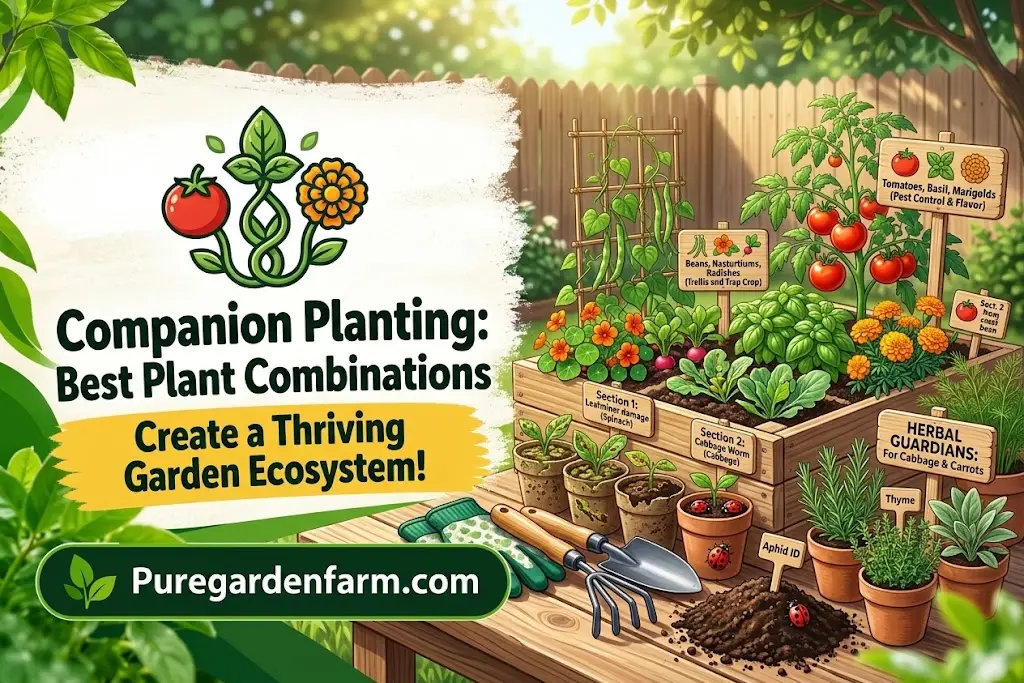
Companion planting means growing certain plants near one another to make better use of space or support particular garden goals. Some combinations can help attract beneficial insects, provide shade, confuse pests, or simply allow compatible crops to share a growing area.
Not every popular companion-planting claim is proven. A good garden plan should focus first on sunlight, spacing, soil, water, and the actual needs of each crop.
Quick Answer: Does Companion Planting Work?
Some companion-planting strategies are useful, especially when they improve habitat, shade, crop diversity, or pest management. However, many traditional claims about one plant magically improving another have limited evidence.
- Start with compatible space and light requirements.
- Use flowering plants to support pollinators and beneficial insects.
- Use crop diversity to avoid putting all plants at the same risk.
- Do not crowd plants just because they are listed as companions.
- Keep realistic expectations about pest control.
Why Gardeners Use Companion Planting
A mixed garden can use space more efficiently than a single-crop block. Tall plants may provide temporary shade, low-growing crops can occupy open soil, and flowering plants can make the garden more attractive to pollinators.
Companion planting can also encourage gardeners to think about the garden as an ecosystem rather than a collection of isolated plants.
Tomatoes and Basil
Tomatoes and basil are a classic pairing because their growing requirements can overlap in a sunny garden. The most important benefit is practical: both can be managed in the same warm-season area when spacing and airflow are adequate.
Do not assume basil automatically makes tomatoes taste better. Grow both because they fit your garden plan, not because of an unsupported promise.
Carrots and Onions
Carrots and onions can occupy the same general growing area because their root and foliage patterns differ. The combination can also increase crop diversity.
Good spacing remains more important than simply pairing two crops. Your garden should have enough room for each plant to develop without severe competition.
Beans and Corn
Tall crops and climbing crops can sometimes be combined to make vertical use of space. Beans can climb suitable supports, while corn can provide structure for some traditional systems.
However, make sure the support is strong enough and that the plants do not compete excessively for light.
Flowers in the Vegetable Garden
Flowering plants can be valuable additions because they provide resources for pollinators and other beneficial insects. Marigolds, calendula, alyssum, and other flowers can add diversity around vegetable beds.
Plant flowers according to their own light, water, and spacing requirements. A flower that struggles in the location will not become useful simply because it is labeled a companion plant.
Companion Planting for Pest Management
Plant diversity can make a garden less uniform, but companion planting should not replace inspection and practical pest management. Look at leaves, stems, and the undersides of foliage regularly.
For overall plant health, use the site’s plant care tips and beginner gardening tips.
How to Plan a Companion Garden
- List the crops you actually want to grow.
- Check sunlight and mature plant size.
- Group plants with similar water requirements.
- Add flowers where they fit without crowding vegetables.
- Leave enough space for airflow and harvesting.
- Rotate crop families when possible.
Common Companion Planting Mistakes
The biggest mistake is treating a companion chart as a substitute for garden planning. Two plants may be considered companions but still perform poorly together if one becomes too large, shades the other, or requires different moisture conditions.
Another mistake is planting too densely. Crowding can increase humidity around foliage and make disease management harder.
Companion Planting and Crop Rotation
Companion planting and crop rotation are different strategies. Companion planting concerns what grows near each other at the same time. Crop rotation changes where plant families are grown across seasons.
Use both where practical. Your garden planning guide can help you organize planting space.
Companion Planting FAQs
What are the best companion plants for tomatoes?
Herbs and flowers can be grown near tomatoes when their space, water, and sunlight needs match. Basil and several flowering plants are common choices, but good spacing and plant health matter most.
Can companion planting prevent all pests?
No. It may support a healthier and more diverse garden, but it is not a guaranteed pest-control method.
Should companion plants be planted very close together?
No. Follow the spacing needs of the individual crops. Overcrowding can create competition and reduce airflow.
Helpful Resources
Read tomato growing tips, basil growing tips, vegetable gardening guidance, garden planning, and how to plant a garden.
For additional research, see Martha Stewart’s companion planting overview, RHS gardening advice, University of Minnesota vegetable guidance, University of Maryland Extension, and USDA gardening zone information.
Conclusion
Companion planting is most useful when it is treated as one part of a complete garden plan. Choose compatible crops, protect spacing, encourage beneficial insects, and focus on proven plant-care fundamentals.