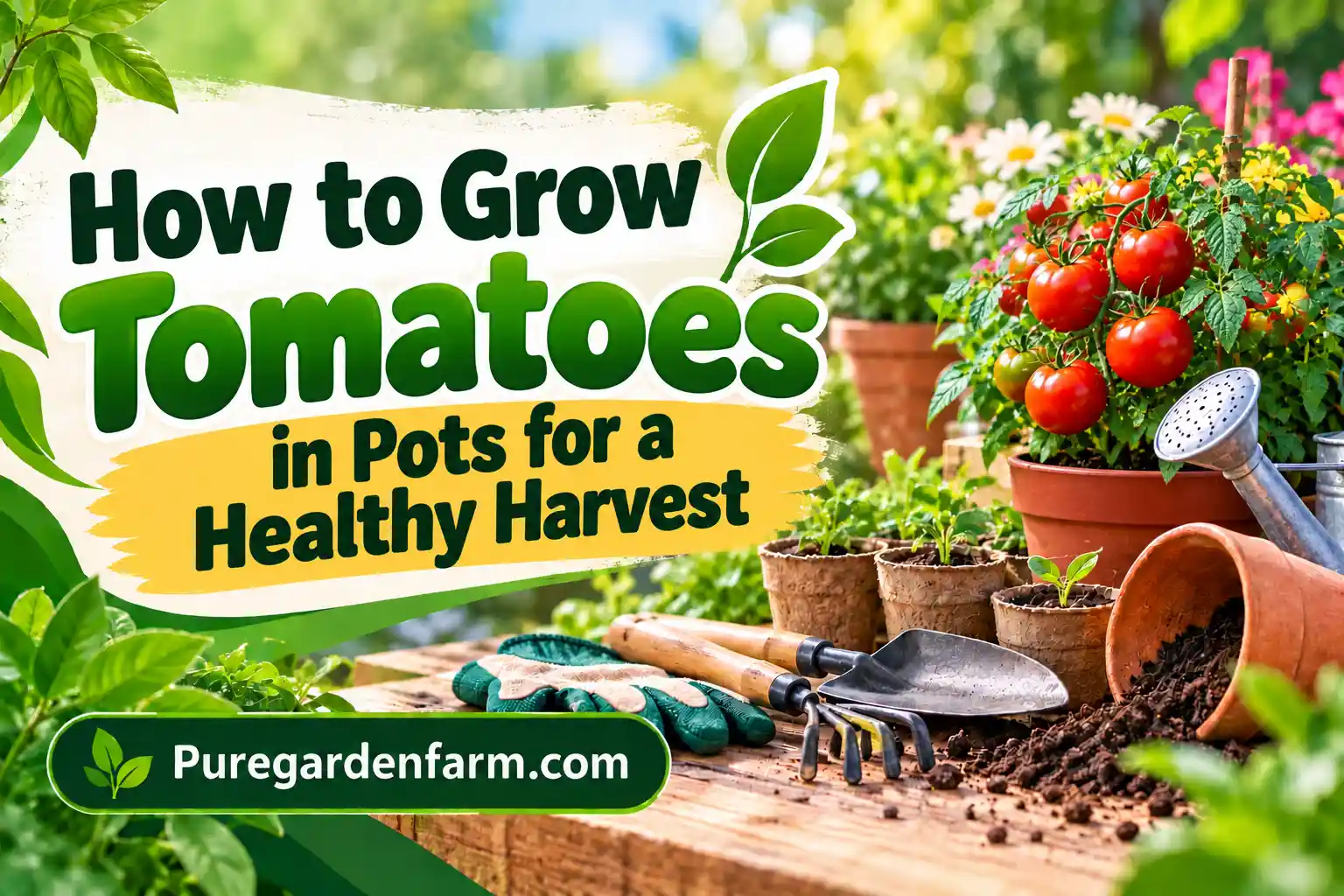
Growing tomatoes in pots is ideal for beginners with a patio, balcony, deck, or small yard. How to grow tomatoes in pots starts with matching the tomato variety to the container.
The right pot, potting mix, sunlight, water, and support make a major difference. This guide covers planting, feeding, pruning, troubleshooting, climate differences, and harvesting.
Quick Answer
To grow tomatoes in pots, choose a suitable variety and use a large container with drainage. Give the plant at least six hours of direct sun, use quality potting mix, keep moisture consistent, and provide support before the plant becomes heavy.
TL;DR
- Choose dwarf, patio, determinate, or suitable cherry tomatoes.
- Use one plant per appropriately sized container.
- Choose a pot with excellent drainage.
- Give tomatoes at least six hours of direct sun.
- Keep moisture steady during fruit development.
- Support vigorous plants early.
- Feed according to the fertilizer label.
- Check plants often for pests and disease.
Choose the Right Tomato Variety
The easiest container tomato is usually a dwarf, patio, or determinate variety. These plants stay more compact and are easier to support in limited space.
Indeterminate tomatoes can also grow in containers. They need more root space, stronger support, and more frequent attention as their vines continue growing.
| Tomato Type | Best For | Container Challenge |
|---|---|---|
| Dwarf | Tiny balconies | Usually low |
| Patio | Decks and patios | Low |
| Determinate | Beginners | Moderate |
| Cherry | Frequent harvests | Variety dependent |
| Indeterminate | Large containers | Higher |
• Choose dwarf types for very small growing spaces.
• Pick patio tomatoes for compact outdoor containers.
• Choose determinate varieties for easier support.
• Use cherry tomatoes when you want frequent small fruit.
• Grow indeterminate varieties only with enough space.
• Check mature height before buying.
• Look for disease resistance suited to your region.
• Match the plant to your available sunlight.
Pick the Right Pot Size
Container size should match the mature plant, not the fruit size. A vigorous cherry tomato can need more space than a compact plant producing larger fruit.
For many compact tomatoes, a five-gallon container is a useful starting point. Larger plants often perform better in larger containers because more growing media provides additional room for roots, water, and nutrients.
• Use one tomato plant per container when possible.
• Choose a container with drainage holes.
• Use larger containers for vigorous indeterminate plants.
• Choose stable containers for tall varieties.
• Avoid tiny decorative pots for productive plants.
• Consider fabric grow bags for large plants.
• Make sure wet containers remain safely supported.
• Size up when the variety is especially vigorous.
Use Quality Potting Mix
Tomatoes perform better in a container mix than ordinary garden soil. Garden soil can become heavy and compact inside pots.
Choose a quality mix that drains well while holding enough moisture for roots. Leave a little space below the rim for watering.
• Use a mix made for containers.
• Avoid heavy soil taken directly from the yard.
• Keep drainage holes clear.
• Do not pack the mix tightly.
• Check whether the mix already contains fertilizer.
• Refresh old mix when disease was a concern.
• Use clean containers for new plants.
• Avoid materials that stay constantly waterlogged.
Give Tomatoes Enough Sun
Tomatoes are sun-loving fruiting plants. Aim for at least six hours of direct sunlight each day.
More suitable sunlight can support strong growth, but extreme heat can create a different problem. In very hot areas, morning sun with some afternoon protection may help reduce stress.
• Choose the brightest safe location.
• Check for building shadows before planting.
• Watch how sunlight changes through the season.
• Keep plants away from deep shade.
• Protect containers from extreme afternoon heat when needed.
• Remember balconies can have strong reflected heat.
• Move portable pots only when practical.
• Recheck sunlight after nearby plants grow.
Plant Tomatoes Correctly
Plant outdoors after the danger of damaging frost has passed in your area. Local planting dates are more useful than one national calendar date.
Tomatoes can produce roots along buried stems. Planting a transplant somewhat deeper can help establish a strong root system when done correctly.
• Harden seedlings before moving them outdoors.
• Water the root ball before transplanting.
• Remove damaged lower leaves.
• Plant deeply when appropriate for the transplant.
• Keep healthy upper leaves above the mix.
• Water thoroughly after planting.
• Avoid damaging the main root ball.
• Install support early for vigorous plants.
Add Support Early
A tomato plant can become surprisingly heavy once fruit develops. Adding support after the plant sprawls often creates unnecessary problems.
Determinate tomatoes may work with a compact cage or stake. Indeterminate varieties usually need taller, stronger support.
• Use cages for bushy plants.
• Use stakes for upright training.
• Use trellises for vigorous vines.
• Install support near planting time.
• Tie stems loosely when needed.
• Check ties as stems thicken.
• Reinforce support after storms.
• Match support height to mature plant size.
Water Container Tomatoes Consistently
Container tomatoes can dry much faster than tomatoes growing in the ground. Small pots, hot weather, strong wind, and heavy fruit loads can increase water demand.
There is no perfect daily schedule. Check the growing mix and adjust watering to the plant, pot, weather, and season.
• Check containers frequently during hot weather.
• Feel the growing mix before watering.
• Water deeply enough to reach the root zone.
• Allow excess water to drain.
• Avoid letting the mix become bone-dry.
• Avoid keeping roots constantly saturated.
• Check small pots more often.
• Increase checks while plants carry heavy fruit.
Feed Tomatoes in Pots
Container plants have a limited supply of growing media. Nutrients can also leave the pot as water drains through it.
Use a fertilizer suited to container vegetables and follow its label. More fertilizer is not automatically better and can cause plant problems.
• Check whether your potting mix includes slow-release nutrients.
• Follow the fertilizer label carefully.
• Feed during active growth when needed.
• Avoid heavy applications.
• Do not fertilize extremely dry plants unless the label allows it.
• Watch for unusually weak or excessive leafy growth.
• Adjust feeding as the season changes.
• Keep fertilizer away from direct stem contact when required.
Prune Without Overdoing It
Pruning is not equally useful for every tomato. Compact determinate plants often need little pruning, while vigorous indeterminate plants may need selective training.
Healthy leaves help the plant produce energy for fruit. Remove damaged or diseased foliage, but avoid stripping away large amounts of healthy growth.
When pruning makes sense
• Remove clearly damaged or diseased leaves.
• Train vigorous vines when necessary.
• Remove unwanted shoots when your training system calls for it.
• Keep crowded growth manageable.
• Improve airflow when foliage becomes excessively dense.
• Avoid aggressive pruning during plant stress.
• Use clean tools when cutting diseased material.
• Leave enough healthy foliage for fruit development.
Help Flowers Set Fruit
Outdoor tomatoes usually receive enough natural movement for pollination. Wind, insects, and normal plant movement can help transfer pollen within flowers.
Heat can interfere with fruit set in some varieties. Keeping plants evenly watered and reducing severe stress is more useful than using complicated pollination tricks.
Mulch and Protect the Root Zone
A suitable mulch layer can slow moisture loss from the container surface. It can also reduce soil or potting-mix splashing onto lower leaves.
Keep mulch slightly away from the stem. The goal is to protect the root zone without keeping the stem base constantly wet.
Prevent Common Pests and Diseases
Container growing can reduce some soil-related problems, but tomatoes still face insects and foliar diseases. Early inspection makes problems easier to identify.
Look at both sides of leaves and inspect new growth. Good airflow, proper watering, clean containers, and healthy plants all help reduce avoidable problems.
• Check leaves several times each week.
• Look beneath leaves for insects.
• Remove badly damaged foliage when appropriate.
• Keep plants spaced for airflow.
• Avoid unnecessary leaf wetting.
• Remove fallen diseased leaves.
• Support vines away from soil surfaces.
• Identify the problem before choosing treatment.
Fix Blossom-End Rot and Cracking
Blossom-end rot is a physiological disorder, not simply a lack of calcium in the pot. Uneven moisture can interfere with calcium movement into developing fruit.
Fruit cracking can also follow major changes in water availability. The most useful first step is to keep moisture more consistent rather than automatically adding calcium.
• Check container moisture regularly.
• Water before severe drying occurs.
• Avoid repeatedly soaking completely dry mix.
• Avoid keeping roots saturated.
• Use mulch to reduce moisture swings.
• Avoid excessive fertilizer.
• Remove badly affected fruit.
• Focus on steady care for developing fruit.
Grow Tomatoes in Different U.S. Climates
Tomato growing seasons vary greatly across the United States. Northern gardeners may have a short frost-free season, while southern gardeners may face intense summer heat.
USDA hardiness zones can provide broad climate information, but vegetable planting also depends on frost dates and seasonal temperatures. Local extension guidance is often more useful for exact timing.
• Use local frost dates in cool regions.
• Start heat-sensitive plants at the right season.
• Watch containers closely during heat waves.
• Expect faster drying in hot climates.
• Protect plants from cold snaps.
• Use shorter-season varieties where appropriate.
• Provide afternoon protection during extreme heat.
• Adjust watering whenever weather changes sharply.
Know When to Harvest
Harvest timing depends on variety, temperature, and growing conditions. In general, pick tomatoes when they have reached their mature color and begin to soften slightly.
Do not rely only on a calendar date. Check the fruit itself and harvest before damaging frost when necessary.
• Check fruit color every day during peak season.
• Handle ripe fruit gently.
• Pick mature fruit before severe frost.
• Follow variety information for expected maturity.
• Harvest frequently during heavy production.
• Remove damaged fruit from the plant.
• Avoid leaving ripe fruit exposed to extreme heat.
• Store harvested tomatoes according to their ripeness.
Common Mistakes to Avoid
Most container problems start with a poor match between the plant and its growing conditions. A large vine in a tiny pot will need far more attention than a compact patio variety.
Before planting, think about the whole system: variety, container, sunlight, water, support, and climate. Getting those six decisions right prevents many common problems.
• Choosing a pot that is too small.
• Using heavy garden soil.
• Planting without drainage.
• Letting containers dry completely.
• Keeping roots constantly waterlogged.
• Waiting too long to add support.
• Overfeeding with fertilizer.
• Ignoring early pest or disease symptoms.
FAQs
Can you grow tomatoes successfully in pots?
Yes. Tomatoes can produce well in containers when the variety, pot size, sunlight, moisture, and support match the plant.
Compact and determinate varieties are usually easier for beginners, while vigorous vines require more space and care.
How big should a pot be for one tomato plant?
A five-gallon pot is a useful starting point for many compact varieties. Larger plants can benefit from larger containers.
Always check the mature growth habit before choosing the final container.
How often should you water tomatoes in pots?
Check the growing mix regularly instead of following a fixed schedule. Containers may need frequent watering during hot, sunny, or windy weather.
The goal is consistent moisture without leaving the roots permanently saturated.
What are the best tomatoes for containers?
Dwarf, patio, determinate, and many compact cherry varieties are good choices. They are generally easier to manage in limited spaces.
Indeterminate tomatoes can also work in large containers when strong support is available.
Do tomato plants need full sun?
Tomatoes generally need at least six hours of direct sunlight each day for good production.
In very hot climates, intense afternoon heat can stress plants. Container placement should reflect local weather conditions.
What soil is best for tomatoes in pots?
Use a quality potting mix designed for containers. It should drain well while holding enough moisture for healthy root growth.
Avoid using ordinary garden soil because it can become compacted inside a container.
Why do tomatoes get blossom-end rot?
Blossom-end rot is linked to problems with calcium movement in developing fruit. Uneven moisture, heat, and other plant stresses can contribute.
Consistent watering is one of the most useful preventive steps for container tomatoes.
Conclusion
Growing tomatoes in pots becomes much easier when you match the variety, container, sunlight, water, and support from the beginning. Compact varieties are usually the simplest choice for beginners.
Check your plants regularly and adjust care for weather and plant growth. With the right setup, a sunny patio, balcony, or deck can produce a rewarding homegrown tomato harvest.