Keeping a home garden healthy takes more than planting the right vegetables and choosing good soil. Regular watering is just as important, especially during hot summer days when raised beds, containers, and vegetable patches can dry out quickly.
If you have ever rushed outside to water your tomatoes before work or returned from a weekend away to find wilted lettuce, you know how challenging it can be to maintain a consistent watering routine.
That is where a drip irrigation system can make a real difference.
Instead of spraying water over the entire garden, drip irrigation delivers water slowly near the roots of your plants. This helps you control where the water goes, reduce unnecessary evaporation, and maintain more consistent soil moisture when the system is properly designed.
But with so many irrigation kits available, choosing the best drip irrigation system for a home garden can feel confusing. Some systems are designed for raised beds, others work better for containers, and some include automatic timers that make watering easier.
In this guide, we will compare popular drip irrigation systems, explain what to look for before buying one, and share practical tips for setting up a system that suits your garden.
Editor’s note: Product details and prices can change. The recommendations below are based on published product information and available 2026 reviews, not firsthand testing by this author. Check current specifications and availability before purchasing.
Why Use a Drip Irrigation System in Your Home Garden?
A drip irrigation system delivers water close to plant roots through small emitters, dripline tubing, or microtubing. Rather than soaking a large area all at once, it directs water to the places where plants need it.
This approach can be especially useful for vegetable gardens, raised beds, greenhouse growing, and container plants.
Here are some of the main benefits.
More Targeted Watering
Drip irrigation delivers water near the root zone, helping you avoid watering paths and other areas where plants are not growing.
This is particularly useful in raised beds where vegetables are planted in organized rows or spaced at regular intervals.
Less Time Spent Watering
Once installed, a drip system can reduce the amount of time you spend moving a hose or watering can around the garden.
If you choose a system with a timer, you can schedule watering for suitable times without having to turn the water on manually every day.
You will still need to inspect the system and adjust the schedule when the weather changes.
Better Control Over Soil Moisture
Consistent soil moisture is important for many vegetables, including tomatoes, peppers, cucumbers, and leafy greens.
A properly configured drip system can make it easier to maintain that consistency. However, watering duration and frequency depend on soil type, plant size, temperature, rainfall, and the flow rate of your emitters.
Potential Water Savings
Drip irrigation can reduce water waste when compared with less targeted watering methods. Actual savings depend on the previous watering method, system design, soil conditions, and maintenance.
The goal is not simply to use less water. It is to deliver the right amount to the root zone without unnecessary runoff or oversaturation.
Best Drip Irrigation Systems for Home Gardens
The best system depends on your garden’s size and layout. A small patio with a few pots has different needs from a vegetable garden containing several raised beds.
1. Rain Bird Landscape and Garden Drip Watering Kit — Best Overall
The Rain Bird Landscape and Garden Drip Watering Kit is a versatile option for gardeners who want to water a mixture of plants.
It is designed for different garden layouts, including in-ground plantings, raised beds, and containers. The kit includes mainline tubing, microtubing, different emitter types, and installation accessories.
What makes it worth considering?
- Flexible layout for different planting arrangements.
- A mixture of emitters for different watering needs.
- Expandable components for future adjustments.
- Suitable for small mixed gardens and established planting areas.
The main consideration is that the reviewed version does not include a timer. You may need to purchase one separately if you want automatic watering.
Best for: Home gardeners who want flexibility and may expand their irrigation setup over time.
2. DIG Raised Bed Garden Drip Irrigation Kit — Best for Raised Beds
If your main growing space consists of raised vegetable beds, a system designed specifically for garden beds can simplify installation.
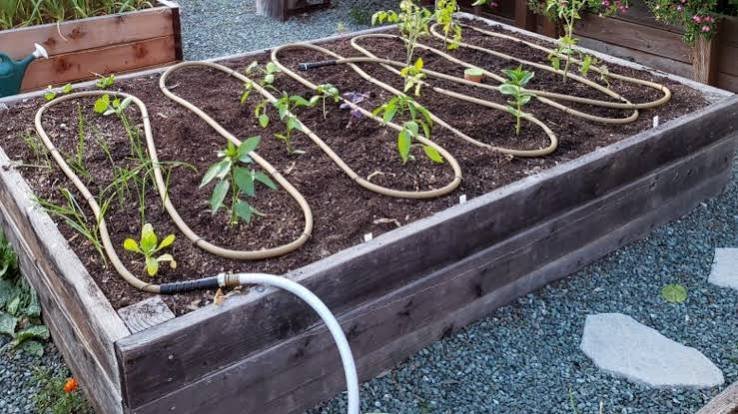
The DIG Raised Bed Garden Drip Irrigation Kit uses dripline tubing with built-in emitters, helping distribute water along planting rows.
Why consider it?
- Designed for raised vegetable beds.
- Built-in emitters reduce the need to install separate drippers at every plant.
- A straightforward approach to watering organized rows.
- Useful for gardeners who want a dedicated raised-bed setup.
Before buying, check the tubing length, emitter spacing, and coverage recommendations. These details determine whether the kit matches the dimensions of your bed.
Best for: Gardeners growing vegetables in one or more raised beds.
3. Raindrip Automatic Watering Kit — Best for Containers and Patios
Container plants often need more frequent watering than vegetables growing in the ground because their limited soil volume can dry out quickly.
A compact automatic drip system can help manage watering for patio planters, herb pots, and other small plant collections.
The Raindrip automatic watering range includes kits designed for containers and small gardens. Some versions include a mechanical timer, while others have different component configurations.
What to look for:
- A timer compatible with your water source.
- Enough tubing to reach every container.
- Emitters suited to the plants’ watering requirements.
- Compatible fittings and pressure regulation where required.
Check the exact model before purchasing because included components and coverage vary.
Best for: Gardeners with patio pots, container vegetables, and small outdoor plant collections.
4. Orbit Garden Box Drip Watering Kit — Best for Scheduled Watering
If you want a straightforward way to automate watering in a garden box, the Orbit Garden Box Drip Watering Kit is another option to consider.
The listed kit includes a hose-faucet timer and is designed to deliver water directly to plants in a garden box.
A timer can be especially helpful during busy weeks, but it does not eliminate the need to monitor your garden.
Advantages include:
- Scheduled watering through a faucet timer.
- A design intended for garden-box applications.
- Less reliance on daily hand watering.
- A convenient option for a consistent garden layout.
Make sure the system’s intended coverage matches your bed. A large vegetable garden may require additional tubing, a different layout, or multiple watering zones.
Best for: Gardeners who want scheduled watering for a raised bed or garden box.
5. A Custom Drip Irrigation System — Best for Larger Gardens
If you have several raised beds, long vegetable rows, or a larger backyard garden, a custom system may offer more flexibility than a small starter kit.
You can select the mainline tubing, dripline, emitters, filter, pressure regulator, and timer to suit the layout.
A custom setup takes more planning, but it can be easier to expand or repair because you can replace individual components.
Best for: Gardeners with multiple beds or a garden that is likely to grow over time.
When designing a larger system, check the available water flow, tubing capacity, and pressure requirements. A long line with too many emitters may not distribute water evenly if the system is undersized.
How to Choose the Best Drip Irrigation System
Before purchasing a kit, consider how your garden is arranged and how you prefer to manage watering.
Garden Size and Layout
A small container garden may need only a short length of tubing and a handful of emitters. A larger vegetable garden may require a mainline with several branches.
Measure the area you want to water before choosing a kit. Make a simple sketch showing the beds, rows, containers, and location of your water supply.
This will help you estimate how much tubing you need and where the emitters should go.
Type of Drip Irrigation
Not every drip system works the same way.
- Drip emitters: Deliver water at specific points, making them useful for individual plants such as tomatoes and peppers.
- Dripline tubing: Contains built-in emitters at regular intervals and works well for rows of vegetables.
- Microtubing: Directs water from the mainline to individual pots or plants.
- Soaker hoses: Release water along their length and can be convenient for garden rows, although performance depends on pressure and hose design.
- Micro-sprayers: Distribute water over a wider area and may suit certain beds or landscape plantings.
For most raised vegetable beds, dripline tubing or a combination of mainline tubing and individual emitters is a practical starting point.
Timer and Automation Features
A timer lets you schedule watering without manually operating the faucet each time.
Basic mechanical timers are often simple to operate. Digital timers may offer more scheduling options, while smart models may provide app controls or additional features.
Choose the level of automation you actually need. A small garden may not require an expensive smart controller.
Remember that a timer follows its programmed schedule unless it has additional features that adjust watering. Rainfall, cooler weather, and changing plant needs may require you to change the settings.
Filter and Pressure Regulator
Many drip irrigation systems benefit from filtration because small emitters can become clogged by sediment and debris.
A pressure regulator helps keep water pressure within the range recommended by the system manufacturer. Excessive pressure may damage components or cause leaks, while insufficient pressure can lead to uneven watering.
Some kits include these components; others require separate purchases.
Check the manufacturer’s instructions before connecting the system.
Expandability
If you plan to add more raised beds later, choose a system with compatible replacement fittings and tubing.
An expandable system can save you from replacing the entire setup when your garden grows.
However, adding more emitters increases the water demand. Expansion must stay within the system’s flow and pressure limits.
How to Install a Drip Irrigation System in a Raised Garden Bed
Installing a basic drip irrigation system is manageable for many home gardeners. The exact process depends on the kit, but these steps provide a useful starting point.
Step 1: Plan Your Layout
Decide which plants need watering and where the tubing should run.
For a rectangular vegetable bed, you might run parallel dripline rows along the planting area. For containers, you can use a mainline with small branches leading to individual pots.
Leave enough room to access plants for harvesting and maintenance.
Step 2: Connect the Water Supply
Attach the system to a suitable faucet or approved irrigation connection.
Install the filter and pressure regulator in the order specified by the manufacturer. If using a timer, follow its instructions and confirm that all fittings are compatible.
Where required by local plumbing rules, use appropriate backflow prevention to protect the potable water supply.
Step 3: Lay Out the Tubing
Place the mainline along the edge of the bed and connect the dripline or smaller branches.
Secure the tubing with suitable stakes or clips so it does not shift when you work in the garden.
Avoid sharp bends that may restrict water flow.
Step 4: Position the Emitters
Place emitters near the root zone of each plant, following the kit’s layout recommendations.
Larger plants may need more than one emitter as their root systems expand. Smaller plants may require less water.
Do not assume every plant should receive the same amount.
Step 5: Flush and Test the System
Before closing the ends of the lines, flush them according to the manufacturer’s instructions.
Run the system and inspect the connections for leaks. Confirm that water reaches the far end of each line and that all emitters are working properly.
Step 6: Adjust the Watering Schedule
Start with the manufacturer’s guidance, then adjust the schedule based on soil moisture, rainfall, temperature, and plant growth.
Check the soil below the surface rather than judging watering needs by the appearance of the soil alone.
If the soil remains saturated, reduce the watering duration or frequency. If the root zone dries too quickly, check the emitters, flow rate, and schedule.
How Often Should You Run a Drip Irrigation System?
There is no single watering schedule that works for every garden.
A newly planted seedling, a mature tomato plant, and a pot of basil have different water requirements. Soil texture and weather also affect how quickly water moves through the growing medium.
As a general approach:
- Check soil moisture regularly, especially during hot weather.
- Water deeply enough to reach the active root zone.
- Allow for rainfall rather than following a rigid schedule regardless of conditions.
- Monitor container plants more frequently because they can dry out quickly.
- Adjust watering as plants grow and seasonal conditions change.
Morning watering is often convenient because it allows you to check the garden early and make adjustments before the hottest part of the day.
For precise scheduling, consider your emitters’ flow rates. An emitter rated at 1 gallon per hour delivers approximately 1 gallon in one hour under its specified operating conditions. Actual output depends on water pressure and the system’s performance.
The goal is to provide enough water for healthy root development without creating waterlogged soil.
Common Drip Irrigation Mistakes to Avoid
Even a good irrigation kit can perform poorly if it is installed or maintained incorrectly.
Using Too Many Emitters
Every emitter draws water from the system. Adding too many can exceed the available flow capacity and cause uneven distribution.
Check the manufacturer’s capacity recommendations before expanding the system.
Forgetting to Check for Clogs
Small emitters can clog over time, particularly if the water contains sediment or mineral deposits.
Inspect the system periodically, clean or replace components when needed, and flush tubing according to the instructions.
Watering Every Day Without Checking the Soil
A timer is convenient, but it does not automatically know when your plants need water.
Overwatering can deprive roots of oxygen and contribute to root problems. Adjust the schedule according to soil moisture and weather.
Ignoring Pressure Requirements
Using a system without the recommended pressure regulator may lead to leaks or inconsistent watering.
Confirm that your faucet pressure and system components are compatible before installation.
Leaving the System Unprotected During Freezing Weather
Water remaining in irrigation tubing and accessories can freeze and damage components.
In climates with freezing winters, disconnect and drain the system before hard freezes. Follow the manufacturer’s winterization instructions for timers, regulators, and tubing.
Are Drip Irrigation Systems Worth the Money?
For many home gardeners, a drip irrigation system is a worthwhile investment.
It can reduce time spent watering, help deliver water more precisely, and make it easier to maintain consistent soil moisture. These advantages are particularly valuable if you have several raised beds or frequently travel during the growing season.
The best value depends on the size of your garden and how much automation you need.
A basic kit may be sufficient for one small bed, while a larger garden may benefit from a modular setup that can be expanded gradually.
Before buying, compare the amount of tubing, number and type of emitters, filter, pressure regulator, timer, and replacement parts included.
Do not choose a kit based on tubing length alone. A system with the right emitters and suitable pressure control may serve your garden better than a longer kit with unsuitable components.
Final Verdict: Which Drip Irrigation System Is Best for Your Home Garden?
The best drip irrigation system is the one that matches your garden’s layout, plants, and watering needs.
For a flexible mixed garden, the Rain Bird Landscape and Garden Drip Watering Kit is worth considering. If you mainly grow vegetables in raised beds, look at a dedicated raised-bed kit such as the DIG system. For patio containers, consider a Raindrip kit designed for small plant collections. If scheduled watering is your priority, a kit that includes a compatible timer can make daily maintenance easier.
Before making a final decision, check the latest product specifications, water-pressure requirements, included accessories, and retailer prices.
A drip irrigation system does not need to be complicated to be useful. Start with a manageable setup, test it carefully, and adjust the watering schedule as your plants grow.
With the right arrangement, you can spend less time moving a hose around and more time enjoying your garden.
Frequently Asked Questions
What is the best drip irrigation system for home gardens?
The best option depends on your garden. A versatile kit works well for mixed plantings, a raised-bed kit suits organized vegetable beds, and a compact automatic system may be more convenient for containers.
Is drip irrigation better than using a garden hose?
Drip irrigation can deliver water more precisely to the root zone and reduce unnecessary watering. A garden hose is simpler for occasional watering, but a drip system may be more convenient for multiple beds or busy gardeners.
Do I need a timer for drip irrigation?
No. You can operate a drip system manually. A timer is useful if you want scheduled watering, but you should still inspect the soil and adjust the schedule when weather conditions change.
How long should I run my drip irrigation system?
The required runtime depends on emitter flow rate, soil type, plant needs, and weather. Start with the manufacturer’s recommendations and check how deeply the soil becomes moist before changing the schedule.
Can I use drip irrigation in raised garden beds?
Yes. Dripline tubing or individual emitters can be arranged along vegetable rows in raised beds. Choose a system with enough tubing and suitable flow capacity for your bed dimensions.
Does drip irrigation save water?
It can reduce water waste when properly designed and maintained. Actual savings depend on the watering method it replaces, system efficiency, and local conditions.
How do I prevent drip emitters from clogging?
Use suitable filtration, flush tubing as recommended, inspect emitters regularly, and follow the manufacturer’s cleaning instructions. Water quality can influence how often maintenance is needed.
Can I leave a drip irrigation system outside all winter?
That depends on the climate and the components. In freezing regions, disconnect and drain the system before hard freezes and store timers or other sensitive parts according to the manufacturer’s instructions.