
Building a raised garden bed is one of the easiest ways to start growing your own vegetables at home. Whether you dream of harvesting fresh tomatoes in summer, picking lettuce for daily salads, or growing herbs just outside your kitchen, a raised bed can help you create a productive garden without a huge backyard.
But before buying lumber, soil, and supplies, there is one important question to answer: How much does it actually cost to build a raised garden bed?
The good news is that you do not need to spend a fortune to get started. A simple DIY garden bed can be relatively affordable, while a larger cedar bed with premium soil, decorative finishes, and professional installation can cost considerably more.
For 2027 planning, a reasonable starting budget for a basic DIY raised garden bed is around $100 to $250. A larger 4-by-8-foot bed made with quality cedar and filled with soil may cost several hundred dollars, depending on local material prices and how you purchase the soil.
In this guide, we will break down raised garden bed costs by size, materials, soil, labor, and additional supplies. You will also learn how to save money without sacrificing the growing conditions your vegetables need.
Editor’s note: All prices in this guide are approximate U.S. planning estimates, not guaranteed 2027 retail prices. Actual costs depend on your location, material choices, delivery fees, and garden design.
How Much Does It Cost to Build a Raised Garden Bed?
For most home gardeners, the cost depends on whether they build the bed themselves, purchase a ready-made kit, or hire someone to handle the entire project.
Here is a general overview of potential costs.
| Type of raised garden bed | Estimated cost |
|---|---|
| Small, basic DIY bed | $50–$150 |
| Medium DIY wooden bed | $100–$300 |
| 4-by-8-foot DIY bed with soil | $190–$650 |
| Galvanized metal bed with soil | $180–$900 |
| Cedar raised bed with soil | $300–$650 |
| Elevated garden bed with legs | $100–$350 |
| Professionally installed bed | $350–$1,400+ |
These ranges overlap because not all raised beds are built the same way. A shallow wooden frame filled with inexpensive bulk soil will cost much less than a deep cedar bed with premium growing mix and professional installation.
For a typical backyard vegetable garden, budgeting around $200 to $400 for a straightforward DIY project is a sensible starting point. If you want premium materials or need everything delivered, leave room in your budget for additional expenses.
What Affects the Cost of a Raised Garden Bed?
Before calculating your budget, it helps to understand where the money goes. The frame itself is only part of the total cost.
1. Size of the Garden Bed
The larger your raised bed, the more lumber or metal you will need. More importantly, a larger bed requires more soil, which can become one of the biggest expenses.
A compact 2-by-4-foot bed may be sufficient for herbs and leafy greens. A 4-by-8-foot bed offers more room for a mixture of vegetables, but its larger footprint requires considerably more growing medium.
Bed height matters, too. A 4-by-8-foot bed that is 12 inches deep holds about 32 cubic feet of soil. Increase the depth to 24 inches, and the volume doubles to 64 cubic feet.
That means deeper beds can increase both material and filling costs substantially.
2. Choice of Material
The material you choose affects the initial price, appearance, maintenance needs, and expected lifespan of the bed.
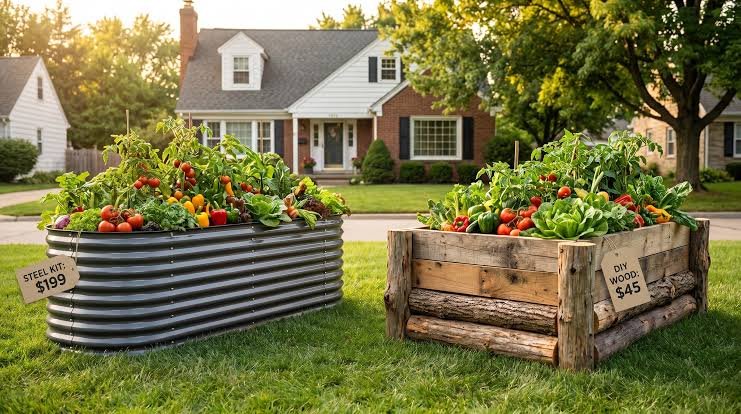
- Untreated pine: Often an economical option for gardeners on a tight budget, although it may deteriorate sooner than naturally durable wood.
- Cedar: A popular choice because of its natural appearance and resistance to decay, but quality cedar can be expensive.
- Galvanized steel: A practical option for gardeners who prefer a modern look and want to avoid wood rot.
- Composite: Often requires little maintenance, but higher-quality products can cost more.
- Concrete blocks: Can be useful for sturdy garden layouts, although they require a level foundation and careful placement.
There is no single best material for every garden. Choose one that suits your climate, budget, and plans for the space.
3. Soil and Compost
Soil is one of the most commonly underestimated costs when building a raised garden bed.
A large frame may look inexpensive when empty, but filling it with suitable growing medium can add a significant amount to the final bill.
Your cost depends on whether you purchase bagged soil, order bulk material, use homemade compost, or combine several ingredients.
Bulk soil is often more economical when filling large beds, especially if you are building several at once. Bagged mixes can be more convenient for a small garden, but purchasing enough bags for a large bed may cost considerably more.
4. Tools and Hardware
If you already own basic gardening and DIY tools, you may not need to spend much in this category.
However, a new project could require exterior-rated screws, corner brackets, a drill, a saw, measuring tools, gloves, and safety glasses.
Check what you already have before buying anything. Borrowing a tool or choosing a kit that requires minimal cutting can help keep the total cost down.
5. Labor and Delivery
Building a raised garden bed yourself saves on labor, but it still takes time to measure, assemble, position, and fill the structure.
If you hire a professional, the price may include site preparation, materials, construction, soil delivery, and cleanup. Ask for an itemized estimate so you understand exactly what is included.
Delivery fees can also affect your budget. A small order of bulk soil may cost more per cubic yard because suppliers often have minimum delivery charges.
Raised Garden Bed Cost by Size
Choosing the right dimensions is one of the easiest ways to control your spending. The following estimates are intended to help with initial planning.
| Bed size | Approximate soil volume at 12 inches deep | DIY budget estimate |
|---|---|---|
| 2 × 4 feet | 8 cubic feet | $50–$150 |
| 4 × 4 feet | 16 cubic feet | $80–$250 |
| 4 × 8 feet | 32 cubic feet | $190–$650 |
| 4 × 10 feet | 40 cubic feet | $250–$750 |
| 4 × 12 feet | 48 cubic feet | $300–$900 |
The DIY estimates include a general allowance for the frame, basic hardware, and filling materials, but not every project will fall within these ranges. Premium materials, expensive bagged soil, delivery fees, and additional supports can increase the cost.
The soil volumes assume a full 12-inch depth and do not account for settling or any space-saving fill methods.
For a beginner, a 4-by-4-foot bed can be a sensible starting point. It offers enough room to grow several types of vegetables without requiring a large initial investment.
If you already know you want to grow several tomato plants, climbing beans, and leafy greens together, a 4-by-8-foot bed may provide more flexibility.
Cost Breakdown for a 4-by-8-Foot Raised Garden Bed
A 4-by-8-foot bed is a popular size for backyard vegetable gardens because it provides useful planting space while allowing most gardeners to reach the center from either side.
Let’s look at how a basic wooden version might fit into your budget.
| Material or expense | Estimated cost |
|---|---|
| Lumber for the frame | $75–$200 |
| Corner supports and bracing | $15–$45 |
| Exterior screws and hardware | $10–$20 |
| Soil and compost | $80–$220 |
| Mulch | $10–$25 |
| Estimated total | $190–$510 |
These are illustrative planning figures rather than a current retailer quote. Cedar, premium soil, or local delivery charges may push the total higher.
You can reduce the cost by choosing less expensive suitable lumber, purchasing soil in bulk, and using tools you already own.
Before shopping, write down the bed’s dimensions and calculate how much soil it needs. This helps prevent unnecessary purchases and makes it easier to compare prices between suppliers.
How Much Does Soil Cost for a Raised Garden Bed?
The cost of soil depends on the size of your bed, the type of mix you choose, and how you buy it.
For example, a 4-by-8-foot bed filled to a depth of 12 inches needs approximately 32 cubic feet of growing medium, equivalent to about 1.19 cubic yards.
That is a substantial amount of soil for a single garden bed.
Bagged soil may be easier to transport and store, especially if you have a small patio or no convenient place for a bulk delivery. Bulk soil can be more economical for larger projects, but check delivery fees and minimum order quantities.
For a productive vegetable garden, choose a growing medium appropriate for raised beds rather than filling the entire structure with dense, compacted soil.
A suitable mix may include topsoil, finished compost, and other ingredients appropriate for your local conditions. Avoid relying entirely on rich compost, which may not provide the balanced physical properties your vegetables need.
How to Calculate the Amount of Soil You Need
Use this simple formula:
Length × width × depth = soil volume in cubic feet
Make sure all measurements are in feet.
For example, a bed measuring 4 feet wide, 8 feet long, and 1 foot deep requires:
4 × 8 × 1 = 32 cubic feet.
If you plan to buy soil by the cubic yard, divide the cubic-foot total by 27.
For this example:
32 ÷ 27 = approximately 1.19 cubic yards.
You may want to allow for settling when purchasing materials. If you are ordering bulk soil, ask the supplier whether the quoted volume is loose or compacted.
Is Cedar More Expensive Than Other Raised Garden Bed Materials?
Cedar is often more expensive than basic untreated pine, but many gardeners prefer it because of its natural appearance and resistance to decay.
The extra upfront cost may be worthwhile if you want a wooden bed that fits your landscaping and are comfortable paying more for the frame.
However, cedar is not the only practical choice. Galvanized steel can be a good alternative if you prefer a modern design and want to minimize maintenance associated with wood deterioration.
When comparing cedar with metal, look at the complete cost of each project. Include the frame, hardware, soil, delivery, and any additional installation supplies.
A lower-priced frame is not necessarily the best long-term value, but a premium frame will not automatically produce more vegetables.
Choose based on construction quality, expected maintenance, and how well the bed suits your growing space.
How Much Does It Cost to Buy a Raised Garden Bed Kit?
If you would rather avoid cutting lumber or assembling a custom frame, a ready-made raised garden bed kit may be a convenient option.
Simple kits can be relatively affordable, while larger or taller models with premium materials may cost several hundred dollars.
Here is a general budgeting guide:
- Small wooden or metal kits: Around $40–$150 before filling.
- Medium raised bed kits: Around $100–$300 before filling.
- Large or premium kits: Around $250–$600 or more before filling.
- Elevated planters: Often around $100–$350, depending on size and construction.
These are broad estimates, not verified 2027 product prices. Check current listings before making a purchase.
Remember that the kit price may not include soil, compost, mulch, delivery, or tools.
A ready-made kit can save time, but building a simple frame yourself may offer better value if you already have the necessary tools.
DIY Raised Garden Bed vs. Professional Installation
One of the biggest decisions is whether to build the bed yourself or hire someone to do the work.
Building It Yourself
A basic wooden raised garden bed is a manageable project for many homeowners. With a straightforward design, suitable tools, and a level site, you can often complete the frame in an afternoon.
The biggest advantages are lower labor costs and more control over the materials and dimensions.
DIY construction also makes it easier to customize the layout as your gardening needs change.
However, you will need to handle measuring, cutting, assembly, positioning, and filling the bed.
Hiring a Professional
Professional installation may make sense if you want multiple beds, custom dimensions, a more elaborate layout, or help preparing uneven ground.
A contractor may also be useful if the project includes irrigation, pathways, fencing, or accessibility features.
The final price depends on the scope of the work and local labor rates. Request a written estimate that separates materials, labor, soil, delivery, and site preparation.
For a single uncomplicated bed, doing the work yourself is generally the more budget-friendly option.
Hidden Costs to Consider Before Building a Raised Garden Bed
It is easy to budget for lumber and soil while forgetting the smaller expenses that add up.
Before starting your project, consider whether you will need any of the following.
Weed and Pest Protection
Cardboard can help suppress existing grass and weeds beneath a bed placed on suitable ground. Use plain cardboard without glossy coatings or excessive tape.
If burrowing animals are a problem, appropriately installed galvanized hardware cloth may help protect the bed from below.
Mulch and Fertilizer
Mulch can help conserve moisture and reduce weeds. Depending on your soil mix and crops, you may also need fertilizer or additional compost.
You do not necessarily need to purchase every garden product at the beginning. Start with the essentials and add supplies as your garden develops.
Watering Equipment
A garden hose may be sufficient for one small bed. Several beds may benefit from a soaker hose or drip irrigation system.
The best choice depends on your garden size, water access, and how frequently you can water by hand.
Delivery Fees
Soil, lumber, and large garden kits may require delivery. Check whether the supplier charges separately for delivery and whether you can collect materials yourself.
Site Preparation
If the chosen area is uneven, covered in thick grass, or difficult to access, you may need extra tools, soil, or labor to prepare it.
Choosing a reasonably level location can reduce these costs considerably.
How to Build a Raised Garden Bed on a Budget
You can create a useful vegetable garden without buying the most expensive materials. A few thoughtful decisions can help reduce the initial cost.
Start With a Smaller Bed
A smaller garden is cheaper to build and easier to maintain. It also lets you learn which vegetables grow best in your climate before investing in a larger setup.
You can always add another bed later.
Choose Practical Materials
Use suitable lumber or a simple metal kit rather than paying extra for decorative features you do not need.
If you choose reclaimed materials, confirm that they are clean and suitable for a vegetable garden. Avoid railroad ties and wood with unknown chemical treatments.
Buy Soil Strategically
Compare bagged and bulk soil prices before ordering. If you are building multiple beds, bulk delivery may be worthwhile.
You can also use homemade finished compost as an ingredient in an appropriate growing mix, provided it is mature and suitable for your crops.
Use Tools You Already Own
You may not need to buy a full set of new tools. A drill, tape measure, level, and basic hand tools are enough for many straightforward designs, depending on the materials and construction method.
Borrowing a saw or other occasional-use tool can also help reduce expenses.
Plan the Layout Before You Build
Measure the garden space, choose bed dimensions, and calculate the required materials before shopping.
Good planning helps you avoid buying too much lumber or ordering more soil than you need.
Is Building a Raised Garden Bed Worth the Cost?
For many home gardeners, yes.
A raised bed creates a dedicated space for vegetables and makes it easier to manage the growing medium, planting layout, and routine maintenance.
It can be especially useful if your existing soil is compacted, drains poorly, or is unsuitable for the crops you want to grow.
However, a raised bed is not essential for every vegetable garden. If your existing ground is suitable and you have enough sunlight, planting directly in the ground may be the cheapest option.
The best choice is the one that fits your space, budget, and gardening goals.
If you are new to growing vegetables, begin with a manageable bed and a few crops you enjoy eating. You can expand the garden as you gain experience.
Final Thoughts: How Much Should You Budget for a Raised Garden Bed?
The cost of building a raised garden bed depends on its size, materials, soil, and whether you do the work yourself.
For a simple DIY project, a budget of around $100 to $250 may be enough for a smaller bed or an economical design. A 4-by-8-foot wooden bed filled with suitable soil may cost approximately $190 to $650, while premium materials, delivery, or professional installation can push the price higher.
Before buying anything, calculate your soil requirements, compare the cost of different frame materials, and decide which features you actually need.
You do not have to build the biggest or most expensive garden bed to enjoy homegrown vegetables. A simple, well-built structure with good soil, adequate sunlight, and consistent watering can be an excellent place to start.
Plan carefully, spend where it matters, and build a garden that works for your space and budget.
Frequently Asked Questions
What is the cheapest way to build a raised garden bed?
A simple DIY wooden frame using suitable, inexpensive lumber is often one of the cheapest options. Keep the dimensions manageable, use tools you already own, and compare the cost of bulk soil with bagged mixes.
How much does a 4-by-8 raised garden bed cost?
A 4-by-8-foot DIY bed may cost roughly $190 to $650 when you include the frame and growing medium. The final amount depends on the wood, soil, hardware, and delivery costs.
How much soil do I need for a 4-by-8 raised garden bed?
A 4-by-8-foot bed filled to a depth of 12 inches holds approximately 32 cubic feet, or 1.19 cubic yards, of growing medium. Allow for settling when ordering soil.
Is cedar worth the extra cost for a raised garden bed?
Cedar may be worth the additional upfront cost if you prefer its natural appearance and resistance to decay. Compare it with other suitable materials based on price, construction quality, and expected maintenance.
Is it cheaper to build a raised garden bed or buy a kit?
Building a simple bed yourself can be cheaper, particularly if you already own the necessary tools. A kit may be more convenient because the components are prepared for assembly, but you still need to budget for soil and other supplies.
How deep should a raised garden bed be for vegetables?
A depth of around 10 to 12 inches is a reasonable starting point for many vegetables when the underlying ground is suitable. Deeper-rooted crops or beds placed over concrete may require additional depth.
Do I need to replace the soil every year?
No. You can usually maintain an established raised bed by adding finished compost or other appropriate amendments as needed. Check soil structure and nutrient requirements rather than replacing all the soil automatically.
Can I build a raised garden bed for under $100?
It may be possible for a small bed if you choose economical materials, use tools you already own, and have access to inexpensive growing medium. A larger bed filled entirely with purchased soil is more likely to exceed that budget.