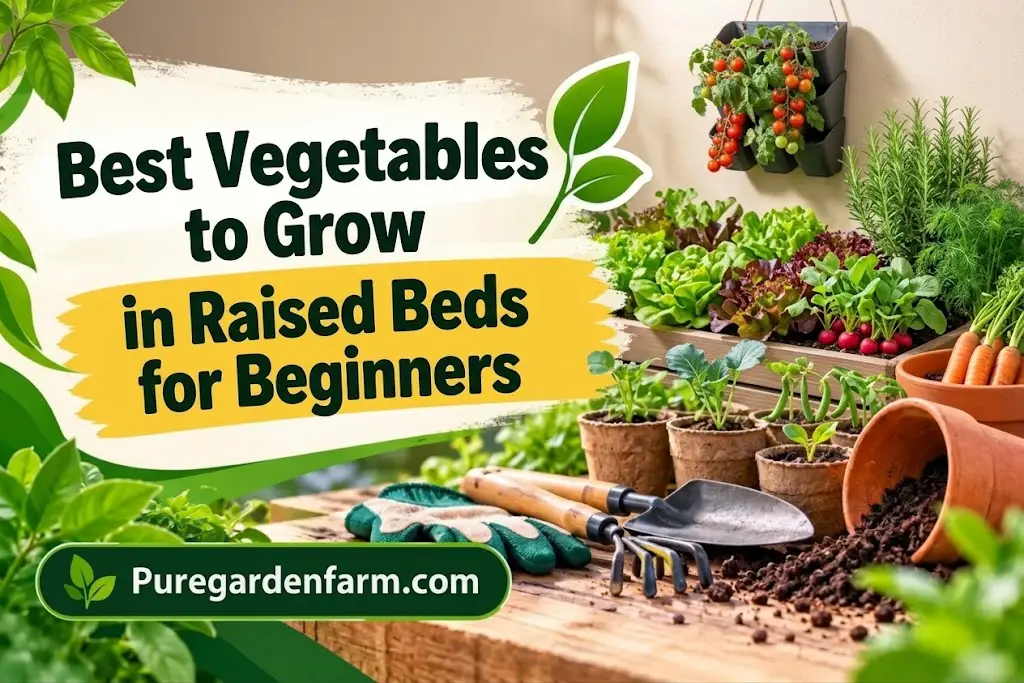
Starting a vegetable garden can feel overwhelming when you are new to gardening, but raised beds make the process easier and more manageable. They provide a defined growing space, help improve drainage, and allow you to control the soil used for your plants. With the right vegetables, even a small backyard or patio can become a productive garden.
The best vegetables to grow in raised beds for beginners are those that grow reliably, require relatively simple care, and produce a useful harvest without complicated techniques. Lettuce, radishes, bush beans, tomatoes, carrots, and zucchini are excellent options for many home gardeners.
In this guide, you will learn which vegetables are easiest to grow in raised beds, how much space they need, and how to care for them throughout the growing season.
Why Raised Beds Are Great for Beginner Gardeners
Raised beds are garden structures filled with soil and placed above the surrounding ground. They can be made from untreated wood, metal, stone, or other suitable materials.
Here are some benefits of raised-bed gardening:
- Better drainage: Properly filled raised beds can help excess water drain away from plant roots.
- Easier soil management: You can choose a suitable growing mix and improve it with compost.
- Less soil compaction: Defined beds make it easier to avoid walking on the growing area.
- Convenient access: Raised beds can make planting, watering, and harvesting more comfortable.
- Efficient use of space: You can grow several vegetables in a small, organized area.
- Fewer weeds in some situations: A well-prepared bed can reduce weed pressure, although weeds may still appear.
Raised beds are especially useful for gardeners dealing with poor native soil, compacted ground, or limited outdoor space.
1. Lettuce
<text color=”secondary” size=”sm”>Difficulty: Easy | Best season: Spring and fall in many US regions</text>
Lettuce is one of the best vegetables for beginners because it grows relatively quickly and does not need a deep raised bed. Leaf lettuce varieties are particularly convenient because you can harvest individual leaves while allowing the plant to continue growing.
Lettuce generally prefers cool weather. In hot climates, it may bolt, producing flowers and seeds while the leaves become bitter.
How to grow lettuce in raised beds:
- Choose a location with full sun during cool weather or partial afternoon shade in warmer conditions.
- Sow seeds according to the variety’s recommended depth and spacing.
- Keep the soil consistently moist.
- Harvest outer leaves as they reach a useful size.
Beginner tip: Plant small batches at intervals during suitable weather to extend your harvest.
2. Radishes
<text color=”secondary” size=”sm”>Difficulty: Very easy | Best season: Spring and fall</text>
Radishes are ideal for new gardeners because many varieties mature quickly. They grow well in raised beds with loose, well-drained soil and require relatively little space.
They are also a useful way to learn basic gardening skills, such as direct sowing, thinning seedlings, and maintaining consistent soil moisture.
How to grow radishes in raised beds:
- Sow seeds directly into the bed.
- Follow the packet’s spacing recommendations.
- Water regularly, especially during dry weather.
- Thin crowded seedlings so roots have room to develop.
Beginner tip: Avoid allowing the soil to dry out completely, as inconsistent moisture can cause poor root development or splitting.
3. Bush Beans
<text color=”secondary” size=”sm”>Difficulty: Easy | Best season: Warm weather</text>
Bush beans are productive warm-season vegetables that do not usually need trellises. Their compact growth habit makes them a good choice for small raised beds.
Beans generally grow best when planted after the danger of frost has passed and the soil has warmed.
How to grow bush beans in raised beds:
- Sow seeds directly into the soil.
- Choose a sunny location.
- Provide adequate spacing for airflow.
- Water consistently, especially during flowering and pod development.
- Harvest pods regularly when they are tender.
Beginner tip: Choose bush varieties rather than climbing pole beans if you want a simpler setup with less support work.
4. Tomatoes
<text color=”secondary” size=”sm”>Difficulty: Easy to moderate | Best season: Warm weather</text>
Tomatoes are a favorite for home vegetable gardens because they can produce a generous harvest. They grow well in raised beds when they receive sufficient sunlight, nutrients, and water.
For beginners, compact determinate varieties or patio tomatoes may be easier to manage than large, vigorous indeterminate plants.
How to grow tomatoes in raised beds:
- Select a sunny location that receives about six to eight hours of direct sunlight when possible.
- Plant healthy seedlings after local frost danger has passed.
- Add a suitable cage or stake for support.
- Water deeply and consistently.
- Mulch the soil to help conserve moisture.
Beginner tip: Avoid wetting the leaves unnecessarily, and leave enough space between plants to improve airflow.
5. Zucchini
<text color=”secondary” size=”sm”>Difficulty: Easy | Best season: Warm weather</text>
Zucchini is known for its productive growth and is often a rewarding choice for beginners. A healthy plant can produce many fruits throughout the summer.
However, zucchini plants can become large, so they need enough room. Compact varieties may be more suitable for small raised beds.
How to grow zucchini in raised beds:
- Plant after the soil has warmed and frost danger has passed.
- Choose a sunny location.
- Give plants enough space for their mature size.
- Water near the soil surface.
- Harvest fruits regularly while they are tender.
Beginner tip: Check plants frequently during peak production because zucchini can grow surprisingly quickly.
6. Carrots
<text color=”secondary” size=”sm”>Difficulty: Easy to moderate | Best season: Spring and fall in many regions</text>
Carrots are a good choice for raised beds because you can create loose, deep soil that supports straight root development. Short-rooted or compact varieties are particularly useful when the bed is not very deep.
Carrots are usually sown directly into the bed rather than transplanted.
How to grow carrots in raised beds:
- Use loose, stone-free soil.
- Sow seeds at the recommended depth.
- Keep the surface soil moist during germination.
- Thin seedlings carefully.
- Avoid compacting the soil around growing roots.
Beginner tip: Carrot seeds may take a while to germinate, so do not let the soil surface dry out during this period.
7. Spinach
<text color=”secondary” size=”sm”>Difficulty: Easy | Best season: Cool weather</text>
Spinach grows well in raised beds during cool weather and provides nutritious leaves for salads and cooked dishes. Its relatively shallow roots make it suitable for many raised-bed setups.
In warmer regions, spinach is often more successful in early spring or fall than during summer.
How to grow spinach in raised beds:
- Sow seeds directly into prepared soil.
- Provide sunlight during cool weather.
- Maintain even soil moisture.
- Harvest mature outer leaves as needed.
Beginner tip: If your summers are hot, grow spinach during cooler months and switch to a heat-tolerant leafy green during summer.
8. Kale
<text color=”secondary” size=”sm”>Difficulty: Easy | Best season: Spring and fall</text>
Kale is a hardy leafy vegetable that tolerates cool weather and can produce leaves over an extended period. It is a practical choice for gardeners who want a plant that offers repeated harvests.
Choose a variety suited to your growing season and available space.
How to grow kale in raised beds:
- Plant seeds or transplants according to local planting recommendations.
- Provide well-drained soil.
- Water consistently.
- Leave enough room for mature plants.
- Harvest the outer leaves while the center continues growing.
Beginner tip: Inspect the undersides of leaves regularly for caterpillars and other common garden pests.
9. Green Onions
<text color=”secondary” size=”sm”>Difficulty: Easy | Best season: Spring and fall in many regions</text>
Green onions are compact vegetables that fit well into small raised beds. They can be grown from seed or suitable sets, depending on the variety.
Their upright growth makes them useful for filling narrow spaces between larger plants, provided all plants receive enough light and airflow.
How to grow green onions in raised beds:
- Choose a sunny location.
- Use fertile, well-drained soil.
- Follow the recommended spacing.
- Water when the soil begins to dry.
- Harvest when the stems reach your preferred size.
Beginner tip: Plant a small row every few weeks during suitable weather for a more continuous supply.
10. Cucumbers
<text color=”secondary” size=”sm”>Difficulty: Easy to moderate | Best season: Warm weather</text>
Cucumbers grow well in raised beds when they receive adequate sunlight, moisture, and warmth. They can spread across the soil or climb a sturdy trellis, depending on the variety.
For small raised beds, trellising is often a practical way to save space.
How to grow cucumbers in raised beds:
- Plant after frost danger has passed.
- Choose a sunny location.
- Use a sturdy trellis for climbing varieties.
- Keep soil moisture consistent.
- Harvest fruits regularly.
Beginner tip: Select a disease-resistant variety suited to your climate, especially if your garden experiences humid summers.
11. Swiss Chard
<text color=”secondary” size=”sm”>Difficulty: Easy | Best season: Spring and fall; some varieties tolerate heat</text>
Swiss chard is a colorful leafy vegetable that grows well in raised beds. Its attractive stems and large leaves make it useful in both edible and ornamental gardens.
It can provide repeated harvests when you remove mature outer leaves carefully.
How to grow Swiss chard in raised beds:
- Sow seeds directly or transplant seedlings.
- Provide sunlight and fertile soil.
- Water regularly.
- Allow enough room for the plants to spread.
- Harvest outer leaves as needed.
Beginner tip: Choose Swiss chard if you want a leafy vegetable that offers a longer harvest period than some fast-growing greens.
12. Peppers
<text color=”secondary” size=”sm”>Difficulty: Easy to moderate | Best season: Warm weather</text>
Sweet and hot peppers can thrive in raised beds when they receive warmth, sunlight, and consistent moisture. They are usually planted as seedlings after the weather has warmed.
Compact pepper varieties are useful for smaller raised beds.
How to grow peppers in raised beds:
- Choose a sunny, sheltered location.
- Transplant seedlings after frost danger has passed.
- Use well-drained, fertile soil.
- Water consistently.
- Support heavily loaded plants if needed.
Beginner tip: Avoid planting peppers too early in cold soil, because low temperatures can slow growth.
Best Vegetables for Small Raised Beds
If you have limited space, prioritize compact crops and vegetables that produce repeatedly.
| Vegetable | Space Needs | Beginner Advantage |
|---|---|---|
| Lettuce | Low | Quick, repeated leaf harvests |
| Radishes | Low | Fast-growing roots |
| Green onions | Low | Upright, compact growth |
| Spinach | Low | Suitable for cool seasons |
| Bush beans | Moderate | No trellis usually needed |
| Carrots | Low above ground | Good use of bed depth |
| Swiss chard | Moderate | Repeated leaf harvests |
| Compact peppers | Moderate | Productive plants in limited space |
Large crops such as zucchini and full-sized tomatoes may take up considerably more room than their young seedlings suggest. Check mature plant dimensions before planting.
How Deep Should a Raised Bed Be for Vegetables?
Raised-bed depth depends on the vegetables you plan to grow and the condition of the ground underneath.
| Raised Bed Depth | Suitable Uses |
|---|---|
| 6–8 inches | Many shallow-rooted leafy greens and herbs, where underlying soil is suitable |
| 10–12 inches | Lettuce, spinach, radishes, green onions, and many other vegetables |
| 12–18 inches | Carrots, tomatoes, peppers, and a wider range of crops |
| 18 inches or more | Deep-rooted crops or gardens built over hard surfaces |
These are general guidelines rather than strict requirements. Root depth, soil quality, drainage, and the presence of compacted ground all affect plant performance. Carrots, in particular, need enough loose soil for the chosen variety’s mature root length.
Best Soil Mix for Beginner Raised Beds
Good soil is essential for a successful raised-bed garden. A suitable growing medium should hold moisture while allowing excess water to drain away.
For a typical raised bed, use a quality blend of screened topsoil, mature compost, and other appropriate growing materials based on the product instructions and local conditions.
Keep these points in mind:
- Use mature, finished compost rather than fresh manure.
- Avoid filling the entire bed with pure compost.
- Make sure the bed drains well.
- Test soil pH when needed.
- Add fertilizer based on crop requirements and soil-test results.
If your raised bed sits directly on healthy garden soil, roots may grow into the ground below. Beds built over concrete or other hard surfaces need sufficient depth and drainage for the vegetables you choose.
How to Arrange Vegetables in a Raised Bed
A simple planting plan can help you use space efficiently without overcrowding your crops.
For a beginner-friendly raised bed, consider combining:
- Back or north side: Taller plants, such as trellised cucumbers, where they will not shade smaller crops.
- Middle section: Bush beans, compact peppers, or other medium-sized plants.
- Front or edges: Lettuce, radishes, green onions, and other compact crops.
- Open spaces: Short rows of fast-growing greens between slower-growing plants, provided spacing and sunlight requirements are met.
Keep large plants such as zucchini in a corner or separate bed when possible. Always follow the spacing recommendations for each variety rather than trying to fit too many plants into a small area.
Common Raised-Bed Gardening Mistakes to Avoid
Beginners can improve their results by avoiding a few common problems.
Planting Too Closely
Crowded plants compete for sunlight, water, and nutrients. They may also have poorer airflow, increasing the risk of disease.
Choosing the Wrong Season
Lettuce and spinach prefer cool weather, while tomatoes, peppers, beans, and zucchini need warmer conditions. Match crops to your local growing season.
Overwatering
Raised beds often drain better than compacted ground, but they can still become waterlogged. Check soil moisture before watering.
Forgetting Mature Plant Size
A tiny tomato seedling can become a large plant. Check the expected height and spread before choosing where to plant it.
Using Poor-Quality Soil
Heavy, compacted soil or a growing medium that drains poorly can limit root development. Choose suitable materials and improve soil gradually.
Ignoring Pests
Raised beds do not prevent all pests. Check leaves regularly and use appropriate, crop-safe control methods when problems appear.
Frequently Asked Questions
What is the easiest vegetable to grow in a raised bed?
Radishes, lettuce, green onions, and bush beans are excellent beginner choices. They are relatively straightforward to grow when planted in the right season and given suitable soil, sunlight, and water.
What vegetables grow best together in raised beds?
Lettuce, radishes, green onions, and other compact crops can often share a bed when their sunlight, water, and spacing needs are compatible. Taller crops should be positioned to avoid shading smaller plants.
How many vegetables can I grow in a 4-by-4-foot raised bed?
The number depends on the vegetables, their mature size, and the spacing they need. A small bed can hold several rows of compact crops, but only a few large tomato, pepper, or zucchini plants may fit comfortably. Follow seed-packet or plant-label spacing.
Do raised-bed vegetables need full sun?
Most fruiting vegetables, including tomatoes, peppers, cucumbers, and beans, perform best with around six to eight hours of direct sunlight daily. Leafy greens may tolerate partial shade, especially during hot weather.
How often should I water vegetables in raised beds?
Water when the soil begins to dry at the depth of the plants’ roots. Raised beds may dry faster than surrounding ground, especially in hot, windy weather. Check moisture regularly rather than following a fixed schedule.
Can I grow vegetables in raised beds all year?
You can grow vegetables across multiple seasons by choosing crops suited to your climate and using suitable protection. In many US regions, leafy greens and other cool-season crops grow best in spring and fall, while warm-season vegetables thrive in summer.
Are raised beds better than in-ground gardens?
Raised beds can provide better control over soil quality, drainage, and planting space. However, an in-ground garden can also be productive when the soil is healthy and well drained. The best option depends on your site, budget, and gardening needs.
Conclusion
The best vegetables to grow in raised beds for beginners are those that match your climate, available space, and gardening experience. Lettuce, radishes, bush beans, carrots, spinach, kale, green onions, and Swiss chard are excellent starting points. Tomatoes, cucumbers, peppers, and zucchini can also reward beginners when given enough room and the right growing conditions.
Start with a few easy crops instead of planting everything at once. Use good-quality soil, provide adequate sunlight, water consistently, and follow recommended spacing. As you gain experience, you can experiment with more varieties and develop a raised-bed garden that produces fresh vegetables throughout the growing season.
Visit PureGardenFarm.com for more practical gardening guides, seasonal planting advice, and tips for growing vegetables at home.