
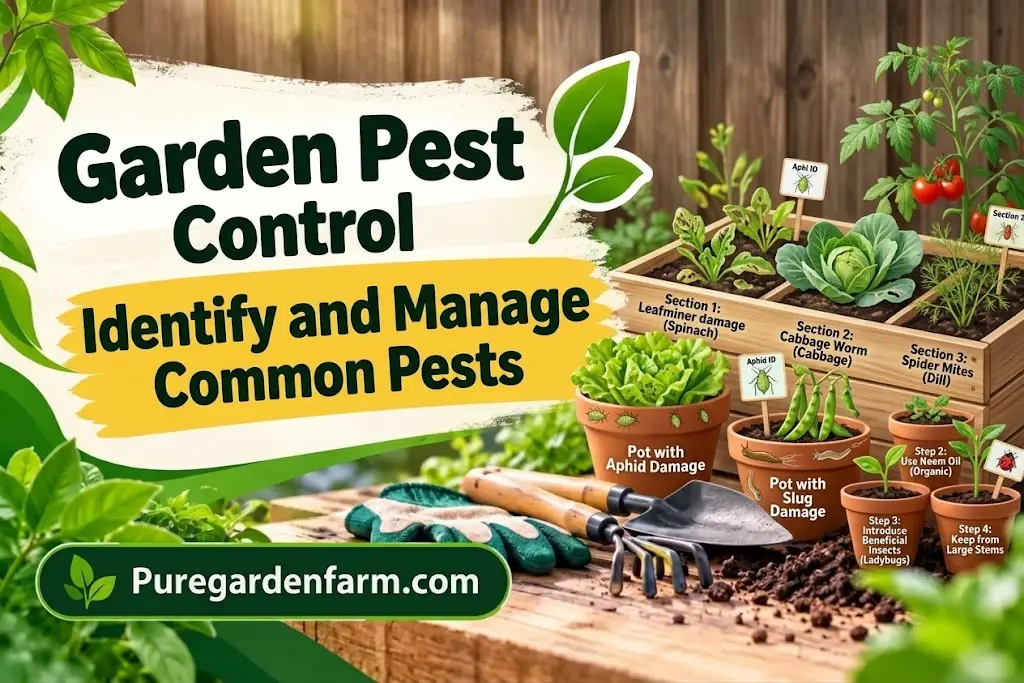
Garden pests are a normal part of growing plants, but a few insects can become serious problems when their populations increase. The best approach is to identify the pest first, inspect the plant carefully, and choose the least disruptive control that fits the situation.
Healthy plants are often better able to tolerate minor pest damage. Good watering, suitable sunlight, healthy soil, spacing, and regular observation should therefore be part of your pest-management plan.
Quick Answer: What Is the Best Garden Pest Control?
The best method depends on the pest and the level of damage. Start with identification and physical removal, then use barriers, sanitation, beneficial insects, or targeted treatments when necessary.
- Inspect leaves, stems, flowers, and undersides regularly.
- Remove heavily infested plant parts when appropriate.
- Use physical barriers for suitable crops.
- Encourage beneficial insects and garden biodiversity.
- Follow every pesticide label exactly if a treatment is required.
Common Garden Pests
Common pests include aphids, caterpillars, whiteflies, spider mites, beetles, slugs, snails, and various sap-feeding insects. The damage pattern often gives clues about what is happening.
Chewed holes can point toward caterpillars or beetles, while curled or sticky leaves may indicate sap-feeding pests such as aphids.
How to Identify Aphids
Aphids are small, soft-bodied insects that often cluster on young growth and the undersides of leaves. They can cause distorted growth and may produce sticky honeydew.
Start by checking new shoots and tender leaves. A strong stream of water can sometimes dislodge small populations, while heavily affected growth can be removed when practical.
How to Manage Caterpillars
Caterpillars can create holes or ragged edges in leaves. Inspect foliage carefully, especially in the morning or evening when some caterpillars are easier to find.
For a small garden, hand-picking can be effective. Use gloves when appropriate and avoid harming beneficial insects that may be mistaken for pests.
Spider Mites and Dry Conditions
Spider mites can become more troublesome under hot, dry conditions. Fine webbing and stippled or bronzed leaves can be warning signs.
Reduce plant stress by maintaining suitable moisture and avoiding severe overcrowding. Inspect plants regularly before damage becomes widespread.
Preventing Pest Problems
Prevention begins with healthy growing conditions. Choose plants suited to your climate, avoid unnecessary fertilizer, provide enough space for airflow, and remove badly diseased or dead plant material.
Your plant care guide and fertilizing guide can help establish a healthier baseline.
Physical Pest Control Methods
- Hand-pick visible insects when practical.
- Use row covers or netting for suitable crops.
- Remove damaged leaves when doing so will not harm the plant.
- Keep weeds under control because they can shelter pests.
- Use clean tools and containers.
Beneficial Insects
Not every insect in the garden is harmful. Lady beetles, lacewings, predatory insects, and many pollinators can contribute to a healthier garden ecosystem.
Avoid spraying broad-spectrum insecticides simply because you see an insect. Identify it first. Some insects may be harmless or beneficial.
Using Pesticides Responsibly
If a pesticide is needed, identify the target pest and choose a product labeled for that pest and crop. Follow the label for dosage, timing, protective equipment, harvest intervals, and environmental precautions.
Do not mix products casually or assume a stronger dose will work better. More is not necessarily safer or more effective.
Pest Control and Garden Hygiene
Remove fallen diseased material, clean tools between problem plants, and avoid bringing visibly infested plants into a healthy garden. Good sanitation reduces opportunities for pests and diseases to spread.
For seasonal preparation, use the site’s fall gardening tips and summer gardening tips.
Garden Pest Control FAQs
Should I kill every insect I find?
No. Many insects are harmless or beneficial. Identify the insect before deciding on control.
What is the safest first step for a small pest infestation?
Inspection and physical removal are often good first options. A strong water spray can also dislodge some soft-bodied pests.
Can healthy plants resist pests better?
Healthy plants can often tolerate stress better, although no plant is completely pest-proof.
Helpful Resources
Use gardening tips for beginners, vegetable growing guidance, garden planting steps, soil preparation, and watering guidance.
For trusted external information, consult RHS gardening advice, University of Minnesota Extension, University of Maryland Extension, EPA home composting guidance, and USDA hardiness zone information.
Conclusion
Effective garden pest control starts with observation rather than immediate spraying. Identify the problem, protect plant health, use physical controls when practical, and apply any pesticide carefully and according to its label.