
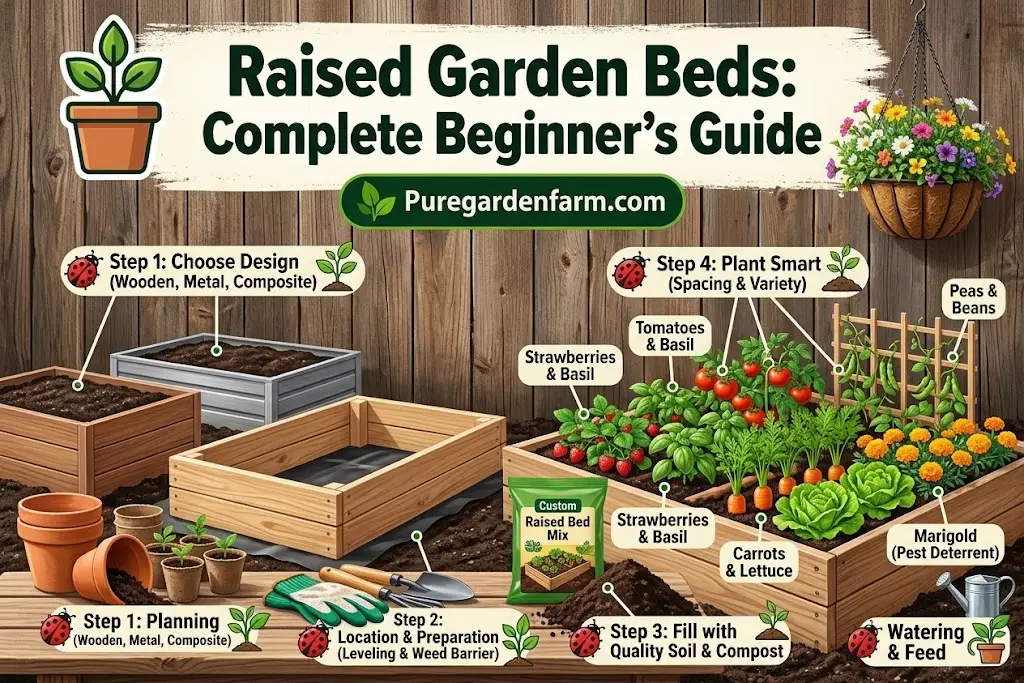
Raised garden beds are one of the easiest ways to create a productive vegetable garden when your native soil is poor, compacted, wet, or difficult to work. Instead of planting directly into the ground, you create a defined growing area filled with suitable soil.
A well-planned raised bed can also make gardening easier to organize. You can control the soil mix, spacing, drainage, and crop layout while keeping paths around the planting area simple to maintain.
Quick Answer: Are Raised Garden Beds Worth It?
Yes. Raised beds are especially useful when you need better control over soil quality, drainage, or garden layout. They can also make planting and maintenance easier because the growing area is clearly defined.
- Choose a sunny location with good access to water.
- Keep the bed narrow enough to reach the center without stepping on the soil.
- Use quality topsoil mixed with mature compost.
- Choose crops that match the available sunlight and season.
- Protect the soil with mulch after planting.
What Is a Raised Garden Bed?
A raised garden bed is a planting area where soil is built above the surrounding ground level. The sides may be made from untreated wood, stone, brick, metal, or other garden-safe materials. Some beds have permanent walls, while others are simply mounded soil.
The important feature is not the material. It is the defined growing space and the improved control over soil depth and drainage.
Benefits of Raised Garden Beds
Raised beds can solve several common gardening problems. They let you improve the soil instead of trying to repair a large area of poor ground. They also warm and drain differently from heavy ground soil, which can help with early-season planting when conditions are suitable.
- Better control over soil quality.
- Improved drainage when the surrounding site drains properly.
- Less soil compaction because you avoid walking on the bed.
- Easy crop rotation and garden planning.
- Clear separation between paths and growing areas.
- Convenient access for routine weeding and harvesting.
How Big Should a Raised Bed Be?
A common beginner-friendly width is about 3 to 4 feet, because most gardeners can reach the center from either side. Length is flexible and depends on the available space.
The bed should be deep enough for the crops you plan to grow. Many vegetables perform well with roughly 8 to 12 inches of usable soil, while deep-rooted crops may need more.
Where Should You Put a Raised Bed?
Choose a level or gently sloping location that receives enough direct sunlight for your crops. Most fruiting vegetables such as tomatoes and peppers need plenty of sun, while leafy crops can tolerate less light.
Place the bed where watering is convenient. A beautiful garden that is difficult to reach often becomes harder to maintain.
What Soil Should You Use?
Do not fill a raised bed with pure compost. A balanced growing medium should provide structure, drainage, organic matter, and nutrients. A practical approach is to combine quality topsoil with finished compost and, when appropriate, another material that improves structure.
Use mature compost rather than fresh manure or unfinished organic waste. Your guide on how to make compost at home explains the basics of producing finished compost.
How to Build a Raised Garden Bed
- Mark the location and remove large weeds.
- Measure the bed and decide the final height.
- Build or place the sides securely.
- Fill the bed with a suitable growing mix.
- Level the surface without compacting it.
- Plan crop spacing before planting.
- Water thoroughly after planting.
Best Vegetables for Raised Beds
Raised beds work well for many common vegetables. Lettuce, radishes, carrots, onions, beans, cucumbers, peppers, tomatoes, herbs, and leafy greens can all be suitable when their individual space, sunlight, and seasonal requirements are met.
For larger plants, allow enough room for mature growth. Your guides on growing tomatoes at home and growing vegetables can help with crop-specific planning.
Raised Bed Planting Tips
Keep tall crops from shading shorter crops whenever possible. Group plants with similar water and sunlight needs together. Avoid overcrowding because dense foliage can reduce airflow and make maintenance harder.
Use your garden planning guide before planting a large bed. Good planning prevents wasted space and makes crop rotation easier.
Watering Raised Garden Beds
Raised beds can dry faster than surrounding ground, particularly during hot or windy weather. Check soil moisture rather than following a rigid calendar. Water deeply enough to moisten the root zone, then allow the soil to dry to the level appropriate for the crop.
For a broader watering routine, see how often to water plants.
How to Maintain Raised Beds
- Remove weeds while they are small.
- Add finished compost when the soil needs organic matter.
- Keep paths clear so you do not step on the growing soil.
- Watch plants for pests and disease symptoms.
- Replace or repair damaged bed walls.
- Rotate crop families when practical.
Common Raised Bed Mistakes
The biggest mistakes are building beds too wide to reach, using poor-quality fill, overcrowding crops, and ignoring drainage. Another common problem is treating every plant as if it needs the same amount of water and fertilizer.
Raised Garden Bed FAQs
Can I put a raised bed directly on grass?
Yes, but prepare the site first. Remove persistent weeds and consider how roots and drainage will behave before filling the bed.
Do raised beds need a bottom?
Usually not when they sit on healthy ground. An open bottom allows natural drainage and lets roots interact with the soil below.
How often should I replace raised bed soil?
You normally do not need to replace all the soil. Add compost and organic matter as needed and maintain good structure over time.
Helpful Gardening Resources
For more practical guidance, read how to prepare garden soil, plant care tips, and gardening tips for beginners.
For authoritative information, see University of Minnesota vegetable gardening guidance, University of Maryland Extension, Penn State Extension, Royal Horticultural Society advice, and USDA Plant Hardiness Zone Map.
Conclusion
Raised garden beds give beginners a practical way to control soil, organize crops, and create a productive growing space. Start with a manageable bed, use good soil, choose suitable crops, and maintain consistent watering and soil care.