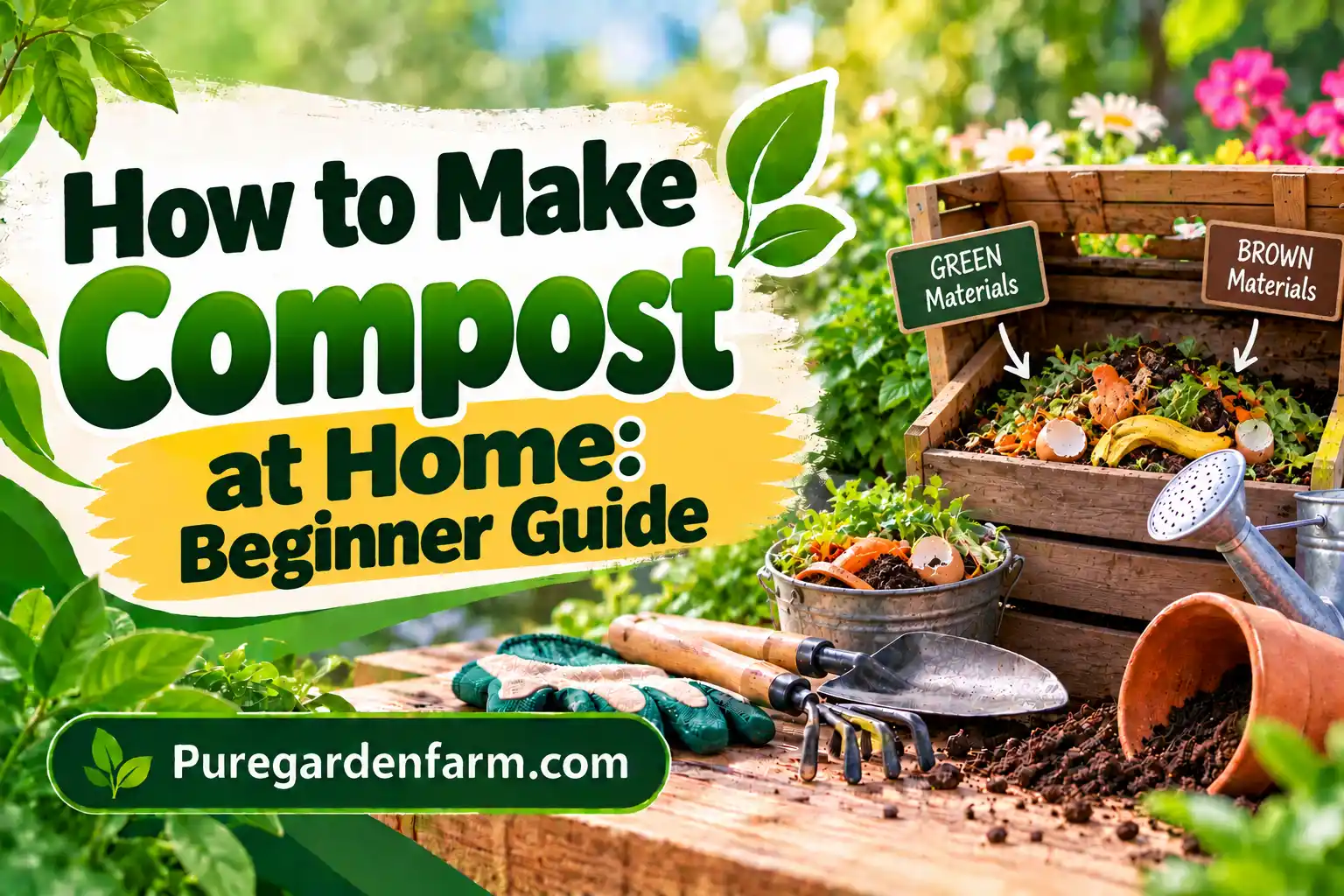
If you’re new to gardening, learning how to make compost at home is a practical place to start. You can recycle food scraps, leaves, and garden waste into a useful soil amendment.
You don’t need a large yard or expensive equipment. A simple bin, enough browns and greens, proper moisture, and good airflow are the basics.
Quick Answer
To make compost at home, combine carbon-rich browns with nitrogen-rich greens. Keep the pile damp, provide oxygen, and let it decompose until it becomes dark, crumbly, and earthy-smelling.
TL;DR
• Start with a simple ventilated bin.
• Mix greens with plenty of browns.
• Keep compost damp, not soaked.
• Provide airflow through loose materials.
• Cover fresh food scraps.
• Wait for mature compost before using it.
What Compost Is and Why It Works
Compost is organic material that has decomposed into a stable soil amendment. Microorganisms break down plant material when they have suitable carbon, nitrogen, moisture, oxygen, and temperature. US EPA
Home composting is an accelerated version of natural decomposition. Your job isn’t to force the process. It’s to create conditions that let the organisms doing the work thrive.
Choose the Best Composting Method
For most beginners, a stationary backyard bin is the simplest option. It can hold kitchen scraps and yard waste without requiring constant attention.
A tumbler suits smaller gardens, while vermicomposting works well for people who mainly want to recycle suitable food scraps. Hot composting is faster but requires more management. University of Maryland Extension
| Method | Best For | Effort | Speed |
|---|---|---|---|
| Stationary bin | Most home gardens | Low | Moderate |
| Cold pile | Low maintenance | Low | Slow |
| Hot pile | Faster compost | High | Fast |
| Tumbler | Small yards | Moderate | Variable |
| Worm bin | Food scraps | Moderate | Moderate |
Best beginner choice: Start with a ventilated stationary bin unless space or local conditions suggest another method.
Pick a Good Compost Location
Choose a level, well-drained location that’s easy to reach. You should be able to carry kitchen scraps to it without making composting a chore.
Partial shade can reduce excessive drying, especially during hot weather. Keep the pile away from places where standing water collects. US EPA
A good location should have:
• Easy year-round access
• Good drainage
• Reasonable airflow
• Enough room for the bin
• A nearby water source
• Space for stored dry leaves
• Protection from excessive runoff
• Enough room to harvest finished compost
Understand Greens and Browns
The two main ingredient groups are greens and browns.
Greens are generally nitrogen-rich and often wetter. Browns are generally carbon-rich and drier. Both groups help create the conditions composting organisms need. US EPA
Greens include:
• Fruit scraps
• Vegetable scraps
• Fresh grass clippings
• Coffee grounds
• Fresh plant trimmings
Browns include:
• Dry leaves
• Shredded cardboard
• Straw
• Untreated wood chips
• Dry plant material
• Plain shredded paper
Get the Compost Ratio Right
A common beginner mistake is treating one ratio as a strict recipe.
EPA guidance uses roughly three parts browns to one part greens by volume. Other reputable gardening sources give different practical ratios because materials vary in moisture and composition. US EPA
Instead of counting every scoop, watch the pile.
If food scraps make it wet, add dry browns. If the pile is dry and barely changing, it may need more green material and moisture.
Build Your First Compost Pile
You can start with a simple layered setup, but perfect layers aren’t required.
Place coarse brown material at the bottom. Then add greens and browns together, keeping fresh food scraps covered with dry material. Chop large pieces when practical because smaller pieces generally expose more surface area to decomposers. US EPA
A practical first load looks like this:
- Add coarse dry material to the bottom.
- Add vegetable and fruit scraps.
- Cover scraps with dry leaves.
- Add more green material.
- Add shredded cardboard or leaves.
- Moisten dry material as needed.
- Mix dense areas to improve airflow.
- Keep the pile loose enough for oxygen.
Keep Compost Moist and Aerated
Compost needs moisture, but too much water is a problem. Saturated material fills air spaces and can create oxygen-poor conditions.
Use your hand as a simple check. The material should feel damp rather than dusty or dripping. If it’s too dry, add water gradually. If it’s soggy, add dry browns and mix it. US EPA
Airflow matters just as much. Loosening compacted material helps oxygen reach the microorganisms that drive aerobic decomposition.
What Can You Put in Compost?
A beginner compost pile can handle many common garden and kitchen materials.
Fruit and vegetable scraps are especially useful. Coffee grounds, leaves, grass clippings, and suitable paper can also contribute useful organic matter. NSF
Good choices include:
• Fruit and vegetable scraps
• Coffee grounds
• Coffee filters
• Dry leaves
• Grass clippings
• Plant trimmings
• Straw
• Shredded cardboard
• Non-glossy paper
• Eggshells
• Small untreated wood pieces
• Suitable herbivore manure
What Should You Keep Out?
A typical backyard compost pile should be more selective than a commercial composting facility.
Avoid materials that can create significant pest, odor, contamination, or pathogen concerns. Commercial facilities may accept materials that require controlled conditions unavailable in a backyard system. US EPA
Keep these out of a standard home pile:
• Meat
• Fish
• Bones
• Dairy
• Grease
• Large amounts of cooking oil
• Pet feces
• Cat litter
• Plastic
• Glass
• Metal
• Painted wood
• Treated wood
• Chemically treated yard waste
• Problematic diseased plants
Hot Compost vs. Cold Compost
Hot composting aims for rapid decomposition by maintaining conditions that support high microbial activity. It takes more planning and attention.
Cold composting is easier. You can add suitable material as it becomes available and allow it to decompose gradually. University of Maryland Extension
Choose hot composting if you want faster results and can manage the pile actively.
Choose cold composting if convenience matters more than speed.
How Long Does Compost Take?
Compost doesn’t have a universal finish date.
EPA notes that backyard composting can take anywhere from months to much longer, depending on conditions and management. US EPA
Hot systems can finish faster when the pile has enough material, moisture, oxygen, and balanced feedstocks. Cold piles can take considerably longer.
Weather also matters. A pile may slow dramatically during cold periods and accelerate during warmer conditions.
How to Tell When Compost Is Ready
Don’t use the calendar alone.
Finished compost is generally:
• Dark brown
• Crumbly
• Earthy-smelling
• Mostly free of recognizable scraps
• No longer heating strongly after active decomposition
Illinois Extension recommends looking for dark, crumbly material with an earthy odor and little recognizable original material. Illinois Extension
If you can still identify large amounts of food or fresh plant material, give it more time.
Fix Common Compost Problems
Most compost problems have a simple cause.
Bad smell: The pile may be too wet, too rich in greens, or short on oxygen.
Soggy texture: Add dry leaves or shredded cardboard and mix the pile.
Dry texture: Add water gradually and mix dry areas into wetter material.
Slow decomposition: Check moisture, airflow, material size, and the balance of greens and browns.
Too many flies: Cover exposed food scraps with dry material.
Pile stays cold: A cold pile isn’t automatically a failure. Cold compost can still decompose slowly.
Current extension guidance also identifies moisture, oxygen, temperature, nutrients, and particle size as major factors affecting compost decomposition. US EPA
Composting Through the Seasons
Your compost routine should change with local weather.
In fall, save dry leaves because they provide an excellent supply of brown material. In summer, watch for excessive drying. In colder regions, expect decomposition to slow during winter. Illinois Extension
Spring: Add fresh plant material with stored browns.
Summer: Check moisture more often during hot, dry weather.
Fall: Shred and save leaves for future batches.
Winter: Keep adding suitable material, but expect slower decomposition in cold climates.
U.S. gardeners should adjust their routine to local temperature, rainfall, and seasonal conditions rather than following one rigid calendar.
How to Use Finished Compost
Finished compost is primarily a soil amendment, not a universal replacement for garden soil.
It can be incorporated into garden beds and used around established plants. It can also be included in appropriate container growing mixes. UConn Extension
Good uses include:
• Vegetable gardens
• Raised beds
• Flower beds
• Tree planting areas
• Shrub beds
• Container mixes
• General soil improvement
• Adding organic matter before planting
Let immature compost finish decomposing before using it around sensitive young plants.
Beginner Composting Checklist
You don’t need to monitor your compost constantly.
Build a routine around a few basic checks:
• Keep dry browns available.
• Add greens gradually.
• Cover exposed food scraps.
• Keep the pile damp.
• Prevent standing water.
• Maintain airflow.
• Mix compacted areas.
• Chop large materials when useful.
• Watch for unusual odors.
• Let finished compost mature.
• Keep unsuitable materials out.
• Save finished compost for garden use.
FAQs
Can I compost coffee grounds?
Yes. Coffee grounds are commonly used as a nitrogen-rich compost ingredient. Mix them with dry browns rather than adding large amounts alone. NSF
Can I compost cardboard?
Yes. Plain, untreated cardboard can provide carbon-rich material. Remove plastic coatings, heavy tape, and unsuitable treated sections first.
Can I compost grass clippings?
Yes. Grass clippings can add nitrogen, but thick layers can become compacted and wet. Mix them with dry leaves or other brown materials.
Why does my compost smell bad?
A strong odor often points to excess moisture, too many greens, or poor airflow. Add dry browns and loosen the pile to restore better conditions.
Can I compost in winter?
Yes. Composting can continue during winter, but cold temperatures slow microbial activity. The exact effect depends on your climate and pile conditions. Illinois Extension
How often should I turn my compost?
There is no single schedule that fits every compost system. Turn it when material becomes compacted or when you want to improve mixing and airflow. Hampshire County Council
Can I use unfinished compost?
It’s better to wait. Finished compost should be dark, crumbly, earthy-smelling, and mostly free of recognizable original materials. Illinois Extension
Conclusion
How to make compost at home comes down to a few dependable principles: use suitable greens and browns, maintain moisture, provide airflow, and give decomposition enough time.
Start with a simple bin and a manageable amount of material. Keep dry leaves or shredded cardboard nearby, cover fresh scraps, and use the finished compost only after it has properly matured.